Tirzepatide: what the research shows
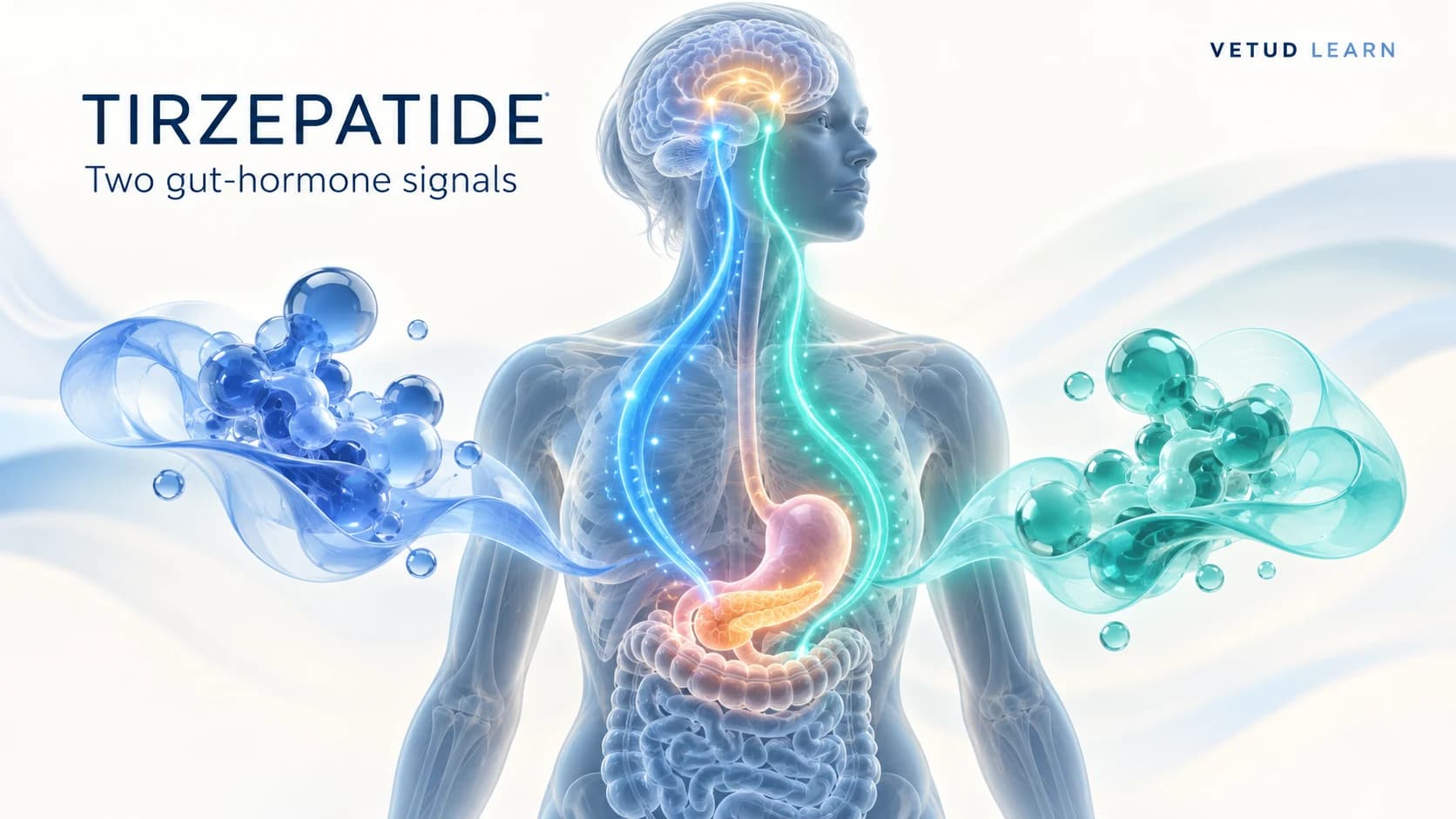
Works on two gut hormones at once, GLP-1 and GIP. In trials it led to some of the biggest weight losses seen with an approved medicine.
Also known as Mounjaro, Zepbound
At a glance
20.9%
average weight lost in 72 weeks (15 mg)
SURMOUNT-1 trial, 2,539 adults · placebo: 3.1%
Approved in the US, EU and other countries. Mounjaro treats type 2 diabetes (and, in the EU, is also used for weight management). Zepbound is approved in the US for weight management and for sleep apnea in adults with obesity.
What is Tirzepatide?
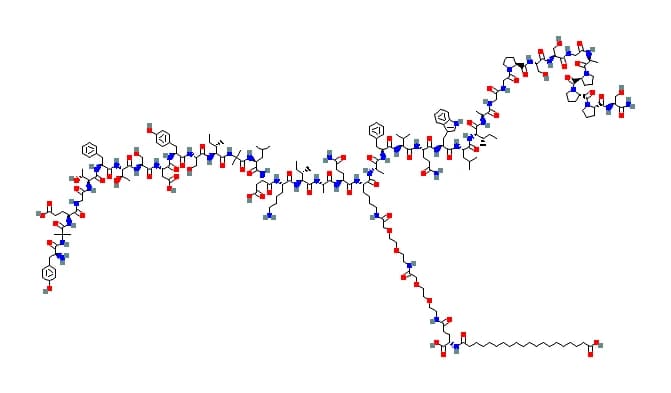
Tirzepatide is a single molecule that acts like two hormones your gut releases after meals: GLP-1 and GIP. Both help control appetite and blood sugar.
How does Tirzepatide work?
Like semaglutide, it tells your brain you’re full, slows your stomach and helps insulin release when blood sugar is high. Adding the GIP signal appears to strengthen these effects.
What does the research show?
- In the SURMOUNT-1 trial, 2,539 adults with obesity took tirzepatide for 72 weeks. On average they lost 15.0%, 19.5% and 20.9% of their body weight on the 5, 10 and 15 mg doses, compared with 3.1% on placebo.
- On the two higher doses, about half or more lost at least 20% of their body weight (50% and 57%), compared with 3% on placebo.
- In February 2026 a head-to-head trial reported that tirzepatide (Zepbound) led to more weight loss than Novo Nordisk’s experimental CagriSema: about 25% versus 23% over 84 weeks.
How do the weight-loss results compare?
Each medicine compared with a placebo in its own trial. Ordered by reported average; this is not a head-to-head ranking.
- Medicine
- Placebo
Retatrutide · Experimental
12 mg weekly
Phase 2 · 48 weeks · 338 people
Tirzepatide · Approved
15 mg weekly (Zepbound)
SURMOUNT-1 · 72 weeks · 2,539 people
Semaglutide · Approved
2.4 mg weekly injection (Wegovy)
STEP 1 · 68 weeks · 1,961 people
Semaglutide · Approved (US)
25 mg daily pill (Wegovy pill)
OASIS 4 · 64 weeks · 307 people
Average body weight lost
Each human trial had different people, doses and lengths, so compare with care. The bars describe approved or experimental medicines studied under medical supervision with diet and exercise advice, not laboratory research products. They use full journal reports; conference findings and different endpoints appear separately below.
Show these numbers as a table
| Medicine | Trial | People | Weeks | Medicine | Placebo | Source |
|---|---|---|---|---|---|---|
| Retatrutide, 12 mg weekly | Phase 2 | 338 | 48 | 24.2% | 2.1% | PubMed |
| Tirzepatide, 15 mg weekly (Zepbound) | SURMOUNT-1 | 2,539 | 72 | 20.9% | 3.1% | PubMed |
| Semaglutide, 2.4 mg weekly injection (Wegovy) | STEP 1 | 1,961 | 68 | 14.9% | 2.4% | PubMed |
| Semaglutide, 25 mg daily pill (Wegovy pill) | OASIS 4 | 307 | 64 | 13.6% | 2.2% | PubMed |
PTT-A and CBL-514: evidence so far
Neither has a comparable average human body-weight-loss result in the research below. Animal body weight and human fat volume measure different things, so they are shown separately from the bars.
Animal research · conference abstract
PTT-A
- Average human body-weight loss
- Not established in the cited research
- What was measured
- Body weight in diet-induced obese rats over 21 days
- Reported finding
- Body weight was 19.2% lower versus vehicle at the higher studied exposure; tirzepatide was 12.1% lower versus vehicle in the same experiment.
A difference versus vehicle in rats is not average weight lost by people. It cannot establish superiority to retatrutide in humans.
Human fat-volume subgroup · conference report
CBL-514
- Average human body-weight loss
- Not established by this fat-volume result
- What was measured
- MRI-measured visceral-fat volume, four weeks after final treatment
- Reported finding
- Visceral-fat volume fell 12.01%; placebo rose 5.68%. The small phase 2 subgroup had 40 participants with later follow-up data.
12.01% less visceral fat is not 12.01% less body weight. CBL-514 is an experimental small molecule, not a peptide.
Known risks and side effects
- Stomach side effects are common: nausea, diarrhea, vomiting and constipation, especially while the dose is being raised.
- Less common but serious problems include inflammation of the pancreas (pancreatitis) and gallbladder problems.
- In the US the label warns about a type of thyroid tumor seen in rodents, so people with a family history of medullary thyroid cancer are told not to use it.
- Weight usually comes back after the medicine is stopped.
Is Tirzepatide approved?
A medicines regulator, such as the FDA in the US or the EMA in Europe, has approved it for specific uses.
Approved in the US, EU and other countries. Mounjaro treats type 2 diabetes (and, in the EU, is also used for weight management). Zepbound is approved in the US for weight management and for sleep apnea in adults with obesity.
From the community
Watch: Tirzepatide and related science
Start with the compound discussion, then use the background lesson to understand its biology. Each card explains its connection. Recordings may predate later findings or regulatory changes.
Ohio State Wexner Medical Center
Ozempic, Mounjaro, Wegovy and Zepbound: which is which?
How the brand names relate to semaglutide and tirzepatide and their prescribed uses. Older recordings may not cover later indications or formulations.
Allison L. Rhodes, MD · obesity medicine
Discusses the compound
Discusses Tirzepatide or its clinical context. Read the original studies linked here for the exact formulation, population and outcomes.
Ohio State Wexner Medical Center
What is a GLP-1 agonist, and how does it work?
A hospital explainer of GLP-1 signalling, appetite and blood-sugar regulation.
Allison L. Rhodes, MD · obesity medicine
Related biology
Background on GLP-1 signalling for understanding Tirzepatide. It does not demonstrate benefits of this compound or formulation.
Ohio State Wexner Medical Center
Avoiding weight regain after GLP-1 medication
Clinical context for weight maintenance after GLP-1 treatment. It does not test CBL-514 or other experimental add-ons.
University hospital patient education
Related biology
Background on weight maintenance after GLP-1 treatment for understanding Tirzepatide. It does not demonstrate benefits of this compound or formulation.
Sources and references
- Tirzepatide Once Weekly for the Treatment of Obesity (SURMOUNT-1)Jastreboff et al. · New England Journal of Medicine · 2022
- LY3298176, a novel dual GIP and GLP-1 receptor agonist: from discovery to clinical proof of conceptCoskun et al. · Molecular Metabolism · 2018
- REDEFINE 4: CagriSema and tirzepatide head-to-head resultsNovo Nordisk · original sponsor announcement · February 23, 2026
VETUD Learn explains published research in plain language. It is general information, not medical advice. Talk to a doctor before starting, stopping or changing any treatment.
In the research shop
Check the catalog for related laboratory research materials. These products are separate from the approved medicines and clinical trial formulations discussed here.
Checking regional availability…