
A new injection makes fat cells self-destruct, and might help stop weight coming back
A small MRI analysis found a 12% reduction in visceral-fat volume, not body weight. A possible effect on weight regain after GLP-1 medicines is still an animal finding.
The study at a glance
- Who took part
- MRI subgroup from two phase 2 trials; 41 at baseline, 40 with later follow-up data; BMI 22 to 30
- How it was tested
- Injections into the lower belly every 3 weeks for up to 12 weeks, against a placebo
- What was measured
- Visceral-fat volume on MRI, not average whole-body weight loss
- Result
- −12.01% on CBL-514 vs +5.68% on placebo, 4 weeks after the last injection
- Status
- The visceral-fat analysis is a preliminary EASD 2026 report; a separate subcutaneous-fat trial is published
The research, explained
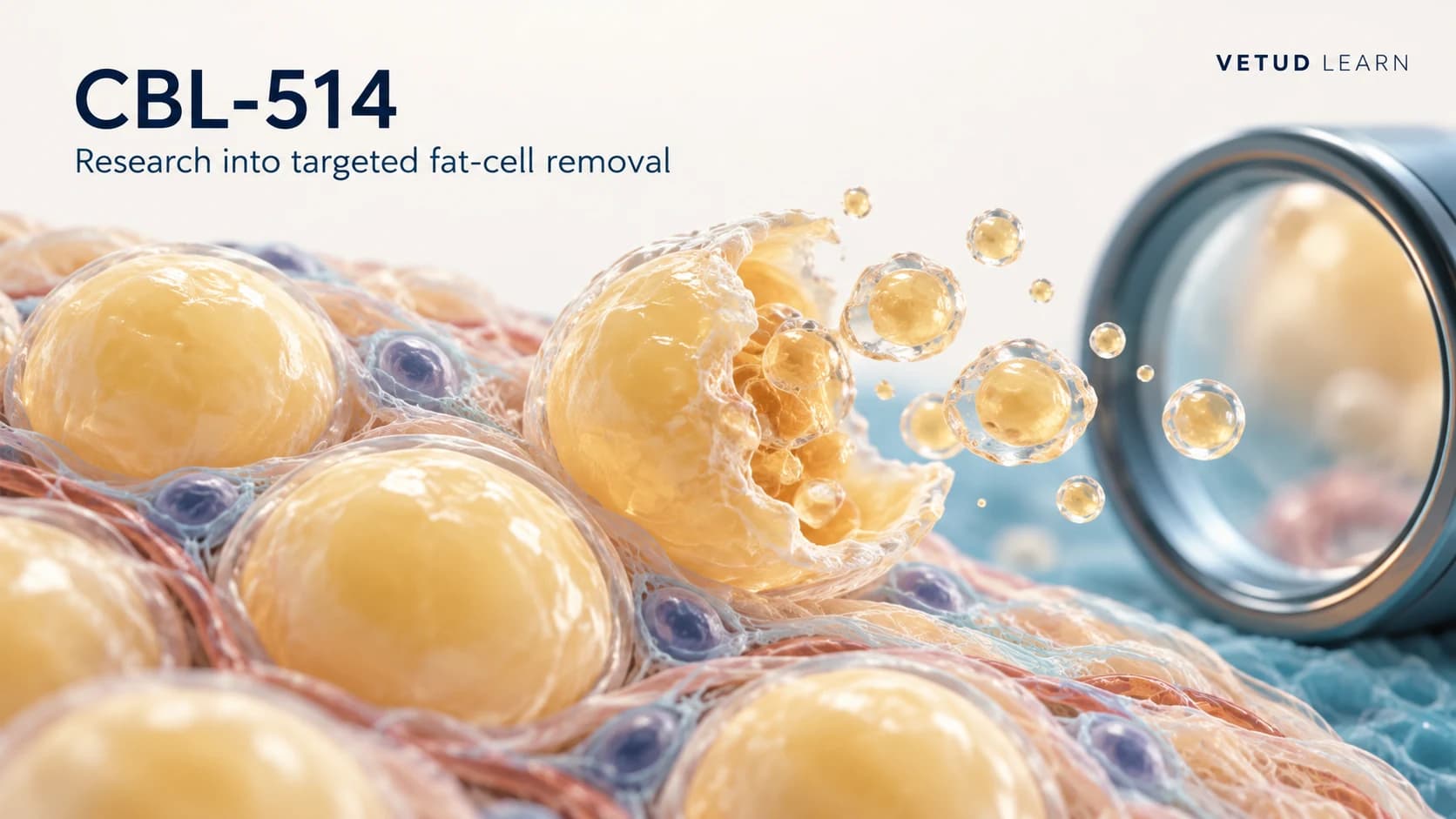
Most weight-loss medicines shrink fat cells. An experimental drug called CBL-514 does something different: it makes fat cells self-destruct.
CBL-514 is a small molecule, not a peptide. It is designed to trigger apoptosis, the body’s cell-removal process, in targeted fat tissue.
Researchers from the University of Alabama at Birmingham and the drug’s developer, Caliway Biopharmaceuticals, presented new results at the European Association for the Study of Diabetes meeting in Milan.
The developer’s account identifies 41 participants at baseline and 40 with later MRI follow-up data. Four weeks after final treatment, visceral-fat volume had fallen by 12.01% in the CBL-514 group and risen by 5.68% on placebo. This does not mean participants lost 12.01% of their body weight.
Earlier phase 2 results showed that 69.6% of treated people lost at least 150 ml of the fat just under the skin by the 8-week follow-up. Nobody on placebo did.
Animal tests added an interesting twist. Rats given CBL-514 together with the GLP-1 medicine tirzepatide lost more weight than rats on tirzepatide alone, and regained less when tirzepatide was stopped. The idea: with fewer fat cells left, there’s less room for fat to come back.
Side effects were mostly mild, short-lived reactions where the injections were given, such as pain, swelling and redness. No serious side effects were reported.
What does this mean?
The studies address local fat deposits and an early hypothesis about weight regain. The fat-volume result cannot be ranked alongside average human body-weight loss with semaglutide, tirzepatide or retatrutide.
What don’t we know yet?
The MRI subgroup was small and the visceral-fat report is preliminary. Reduced weight regain after stopping a GLP-1 medicine has not been established in people. Long-term safety and whole-body weight outcomes need further study.
Watch and learn
Learn what apoptosis means, why weight regain is studied, and how to read a human study. These videos are background; they do not establish that CBL-514 prevents weight regain in people.
Khan Academy
Apoptosis: programmed cell death
What programmed cell death means, how it differs from injury, and why it matters in biology.
Cell-biology education
Related biology
Background on programmed cell death for understanding CBL-514, Tirzepatide, Semaglutide. It does not demonstrate benefits of this compound or formulation.
Ohio State Wexner Medical Center
Avoiding weight regain after GLP-1 medication
Clinical context for weight maintenance after GLP-1 treatment. It does not test CBL-514 or other experimental add-ons.
University hospital patient education
Related biology
Background on weight maintenance after GLP-1 treatment for understanding CBL-514, Tirzepatide, Semaglutide. It does not demonstrate benefits of this compound or formulation.
National Institute of Mental Health
Different types of clinical research
An introduction to the different questions and designs used in studies involving people.
NIMH · US National Institutes of Health
Research skills
Helps you judge the study design or uncertainty in CBL-514, Tirzepatide, Semaglutide research; it is not a trial of the compound.
Sources and references
- Efficacy and safety of CBL-514 injection in reducing abdominal subcutaneous fatGold et al. · Aesthetic Surgery Journal · randomized phase 2 study · 2025
- CBL-514: visceral-fat subgroup and weight-regain research at EASD 2026EASD press-room report reproduced by Caliway · preliminary conference findings · October 2, 2026
VETUD Learn explains published research in plain language. It is general information, not medical advice. Talk to a doctor before starting, stopping or changing any treatment.
In the research shop
Check the catalog for related laboratory research materials. These products are separate from the approved medicines and clinical trial formulations discussed here.
Checking regional availability…