CBL-514: what the research shows
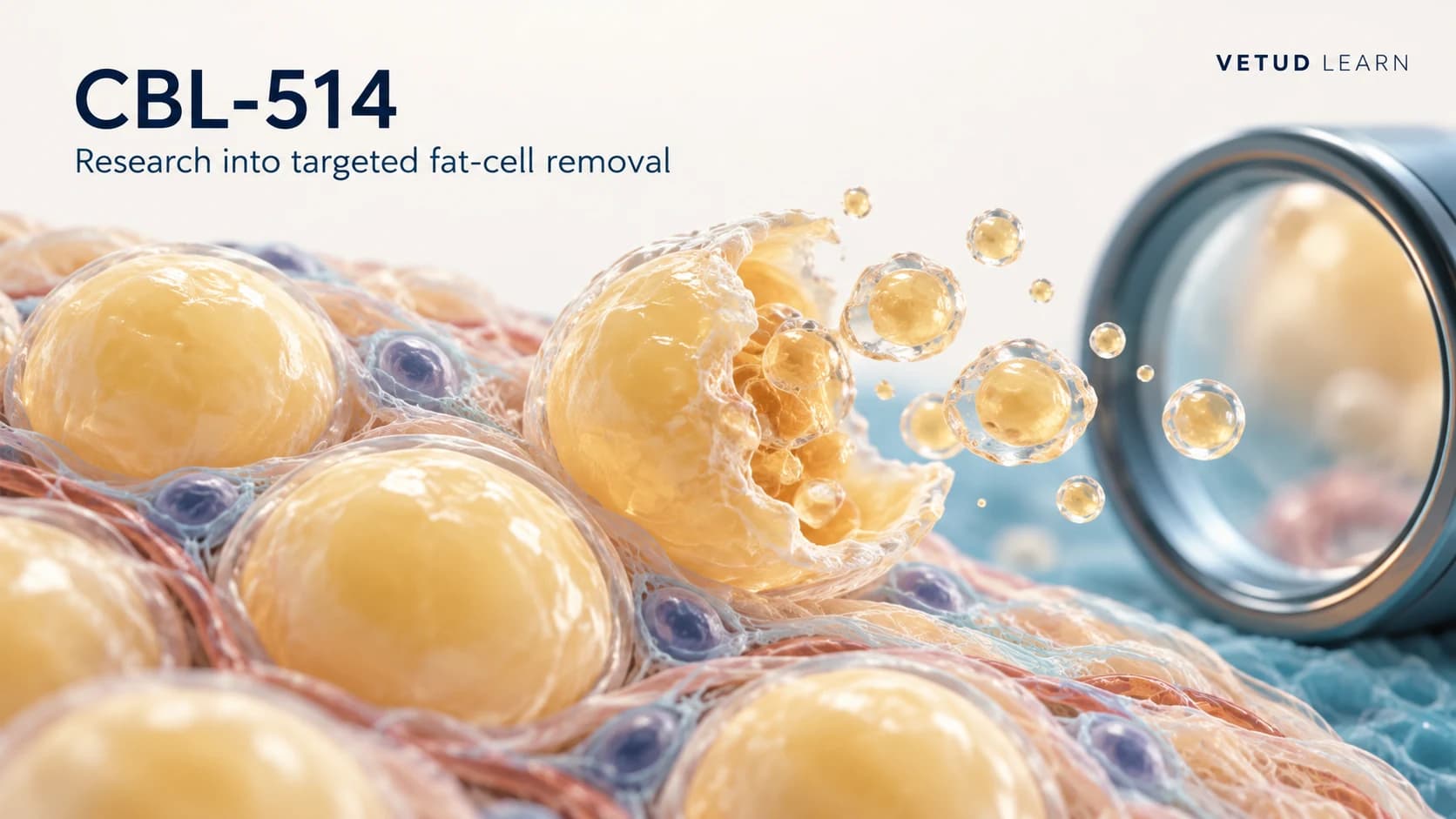
A small molecule, not a peptide, studied for reducing local fat deposits by triggering fat-cell death.
At a glance
−12.01%
visceral-fat volume, not body weight
Preliminary MRI subgroup · four weeks after final treatment · placebo: +5.68%
An experimental small-molecule drug in human studies, not an approved peptide medicine. Its fat-volume results are different from whole-body weight loss.
This compound is not a peptide, but is often discussed alongside them.
What is CBL-514?
CBL-514 is an investigational injectable drug developed by Caliway. Studies examine abdominal fat under the skin and, in a smaller subgroup, visceral fat around the organs.
How does CBL-514 work?
It is designed to trigger apoptosis, a process that removes cells, in targeted fat tissue. Clinical research measures whether local fat deposits shrink; this is a different endpoint from a change in total body weight.
What does the research show?
- A published randomized phase 2 study enrolled 76 participants. At eight-week follow-up, 69.6% of assessed CBL-514 participants had lost at least 150 mL of subcutaneous fat, compared with none on placebo.
- An EASD 2026 conference report described a small MRI subgroup: visceral-fat volume fell 12.01% four weeks after final treatment, while placebo rose 5.68%. That is not a body-weight-loss percentage.
- A possible reduction in weight regain after stopping tirzepatide has been reported in rats. It has not been established in people by the cited studies.
How do the weight-loss results compare?
Each medicine compared with a placebo in its own trial. Ordered by reported average; this is not a head-to-head ranking.
- Medicine
- Placebo
Retatrutide · Experimental
12 mg weekly
Phase 2 · 48 weeks · 338 people
Tirzepatide · Approved
15 mg weekly (Zepbound)
SURMOUNT-1 · 72 weeks · 2,539 people
Semaglutide · Approved
2.4 mg weekly injection (Wegovy)
STEP 1 · 68 weeks · 1,961 people
Semaglutide · Approved (US)
25 mg daily pill (Wegovy pill)
OASIS 4 · 64 weeks · 307 people
Average body weight lost
Each human trial had different people, doses and lengths, so compare with care. The bars describe approved or experimental medicines studied under medical supervision with diet and exercise advice, not laboratory research products. They use full journal reports; conference findings and different endpoints appear separately below.
Show these numbers as a table
| Medicine | Trial | People | Weeks | Medicine | Placebo | Source |
|---|---|---|---|---|---|---|
| Retatrutide, 12 mg weekly | Phase 2 | 338 | 48 | 24.2% | 2.1% | PubMed |
| Tirzepatide, 15 mg weekly (Zepbound) | SURMOUNT-1 | 2,539 | 72 | 20.9% | 3.1% | PubMed |
| Semaglutide, 2.4 mg weekly injection (Wegovy) | STEP 1 | 1,961 | 68 | 14.9% | 2.4% | PubMed |
| Semaglutide, 25 mg daily pill (Wegovy pill) | OASIS 4 | 307 | 64 | 13.6% | 2.2% | PubMed |
PTT-A and CBL-514: evidence so far
Neither has a comparable average human body-weight-loss result in the research below. Animal body weight and human fat volume measure different things, so they are shown separately from the bars.
Animal research · conference abstract
PTT-A
- Average human body-weight loss
- Not established in the cited research
- What was measured
- Body weight in diet-induced obese rats over 21 days
- Reported finding
- Body weight was 19.2% lower versus vehicle at the higher studied exposure; tirzepatide was 12.1% lower versus vehicle in the same experiment.
A difference versus vehicle in rats is not average weight lost by people. It cannot establish superiority to retatrutide in humans.
Human fat-volume subgroup · conference report
CBL-514
- Average human body-weight loss
- Not established by this fat-volume result
- What was measured
- MRI-measured visceral-fat volume, four weeks after final treatment
- Reported finding
- Visceral-fat volume fell 12.01%; placebo rose 5.68%. The small phase 2 subgroup had 40 participants with later follow-up data.
12.01% less visceral fat is not 12.01% less body weight. CBL-514 is an experimental small molecule, not a peptide.
Known risks and side effects
- Reported reactions include pain, swelling and redness at injection sites.
- Small, short studies cannot establish uncommon or long-term risks. Local fat reduction does not establish a treatment benefit for obesity or weight regain.
Is CBL-514 approved?
Tested in people, but not approved as a medicine.
An experimental small-molecule drug in human studies, not an approved peptide medicine. Its fat-volume results are different from whole-body weight loss.
From the community
Watch: CBL-514 and related science
We have not selected a reliable dedicated CBL-514 video. These lessons cover the relevant biology and research methods; the compound-specific evidence is in the sources below.
Khan Academy
Apoptosis: programmed cell death
What programmed cell death means, how it differs from injury, and why it matters in biology.
Cell-biology education
Related biology
Background on programmed cell death for understanding CBL-514. It does not demonstrate benefits of this compound or formulation.
Ohio State Wexner Medical Center
Avoiding weight regain after GLP-1 medication
Clinical context for weight maintenance after GLP-1 treatment. It does not test CBL-514 or other experimental add-ons.
University hospital patient education
Related biology
Background on weight maintenance after GLP-1 treatment for understanding CBL-514. It does not demonstrate benefits of this compound or formulation.
National Institute of Mental Health
Different types of clinical research
An introduction to the different questions and designs used in studies involving people.
NIMH · US National Institutes of Health
Research skills
Helps you judge the study design or uncertainty in CBL-514 research; it is not a trial of the compound.
Sources and references
- Efficacy and safety of CBL-514 injection in reducing abdominal subcutaneous fatGold et al. · Aesthetic Surgery Journal · randomized phase 2 study · 2025
- CBL-514: visceral-fat subgroup and weight-regain research at EASD 2026EASD press-room report reproduced by Caliway · preliminary conference findings · October 2, 2026
VETUD Learn explains published research in plain language. It is general information, not medical advice. Talk to a doctor before starting, stopping or changing any treatment.
In the research shop
Check the catalog for related laboratory research materials. These products are separate from the approved medicines and clinical trial formulations discussed here.
Checking regional availability…