
PTT-A targets four receptors. The evidence is still in animals
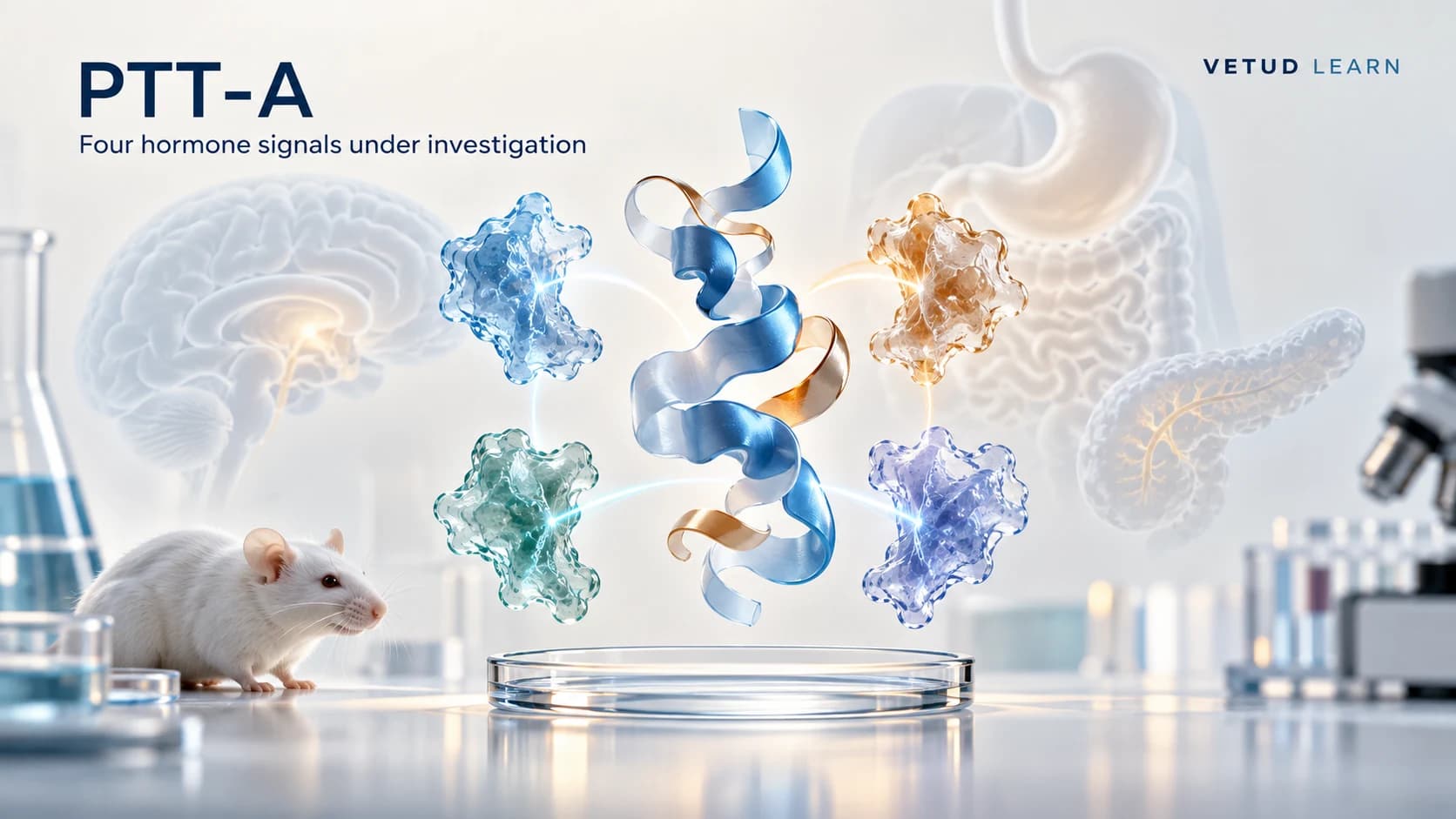
The experimental peptide combines GLP-1, GIP, amylin and calcitonin activity. Here is what the original research can tell us about weight loss.
The study at a glance
- Compound
- PTT-A, an experimental peptide tetra-agonist from Pep2Tango
- Evidence reviewed
- ADA 2024 and 2025 conference abstracts, plus the developer’s launch announcement
- Study model
- Cells and rodents; the 2025 comparison used diet-induced obese rats for 21 days
- Human weight loss
- Not established in the cited research
- Versus retatrutide
- No human head-to-head result in these sources
The research, explained
PTT-A is designed to combine four receptor activities in one peptide. The discovery work tested the molecule in laboratory systems and animal models. Pep2Tango’s 2024 launch announcement described preparations for clinical development; an announced development plan is not a clinical result.
The ADA 2025 abstract compared PTT-A with tirzepatide in obese rats. Researchers reported body-weight and fat-mass reductions with preservation of measured muscle outcomes in the PTT-A groups. Those findings are a reason to investigate further, not proof of the same benefit in people.
The weight result is expressed relative to the vehicle-control animals. It should not be read as the percentage of starting weight lost by a person. Our comparison shows this animal result separately from the human trials.
Receptor counts also cannot rank medicines: four targets do not automatically outperform three. A claim that PTT-A beats retatrutide in people would require suitable human evidence that these sources do not provide.
What does this mean?
PTT-A is an early research approach worth following. It does not yet have a comparable human average weight-loss percentage in the sources reviewed here.
What don’t we know yet?
Human effectiveness, muscle preservation, tolerability and long-term safety remain unresolved by these preclinical sources. Conference abstracts provide less detail than full study reports.
Watch and learn
These lessons explain one of PTT-A’s proposed pathways and how studies in people differ from preclinical work. None is a PTT-A human trial.
Ohio State Wexner Medical Center
What is a GLP-1 agonist, and how does it work?
A hospital explainer of GLP-1 signalling, appetite and blood-sugar regulation.
Allison L. Rhodes, MD · obesity medicine
Related biology
Background on GLP-1 signalling for understanding PTT-A, Retatrutide, Tirzepatide. It does not demonstrate benefits of this compound or formulation.
National Institute of Mental Health
What is clinical research?
Why studies in people are needed and what clinical research is designed to establish.
NIMH · US National Institutes of Health
Research skills
Helps you judge the study design or uncertainty in PTT-A, Retatrutide, Tirzepatide research; it is not a trial of the compound.
National Institute of Mental Health
Different types of clinical research
An introduction to the different questions and designs used in studies involving people.
NIMH · US National Institutes of Health
Research skills
Helps you judge the study design or uncertainty in PTT-A, Retatrutide, Tirzepatide research; it is not a trial of the compound.
Sources and references
- PTT-A tetra-agonist compared with tirzepatide in diet-induced obese rats (85-OR)Ghosh et al. · Diabetes · ADA conference abstract · 2025
- Discovery of long-acting peptide tetra-agonists in animal models of obesity (299-OR)Diabetes · ADA conference abstract · 2024
- Versant Ventures unveils Pep2Tango TherapeuticsOriginal company launch announcement · November 21, 2024 (PDF)
VETUD Learn explains published research in plain language. It is general information, not medical advice. Talk to a doctor before starting, stopping or changing any treatment.
In the research shop
Check the catalog for related laboratory research materials. These products are separate from the approved medicines and clinical trial formulations discussed here.
Checking regional availability…