Growth hormone in healthy older adults: a little more muscle, the same weight, more side effects
A systematic review of randomized trials found small changes in body composition and higher rates of swelling and joint pain. Its authors could not recommend it against aging.
The study at a glance
- Review
- 31 articles describing 18 study groups (Annals of Internal Medicine, 2007)
- Who took part
- 220 healthy older adults on growth hormone; average age 69; treatment lasted 27 weeks on average
- Body composition
- Fat mass −2.1 kg, lean mass +2.1 kg
- Weight
- No significant change (+0.1 kg)
- Side effects
- More swelling, joint pain, carpal tunnel syndrome and male breast growth
The research, explained
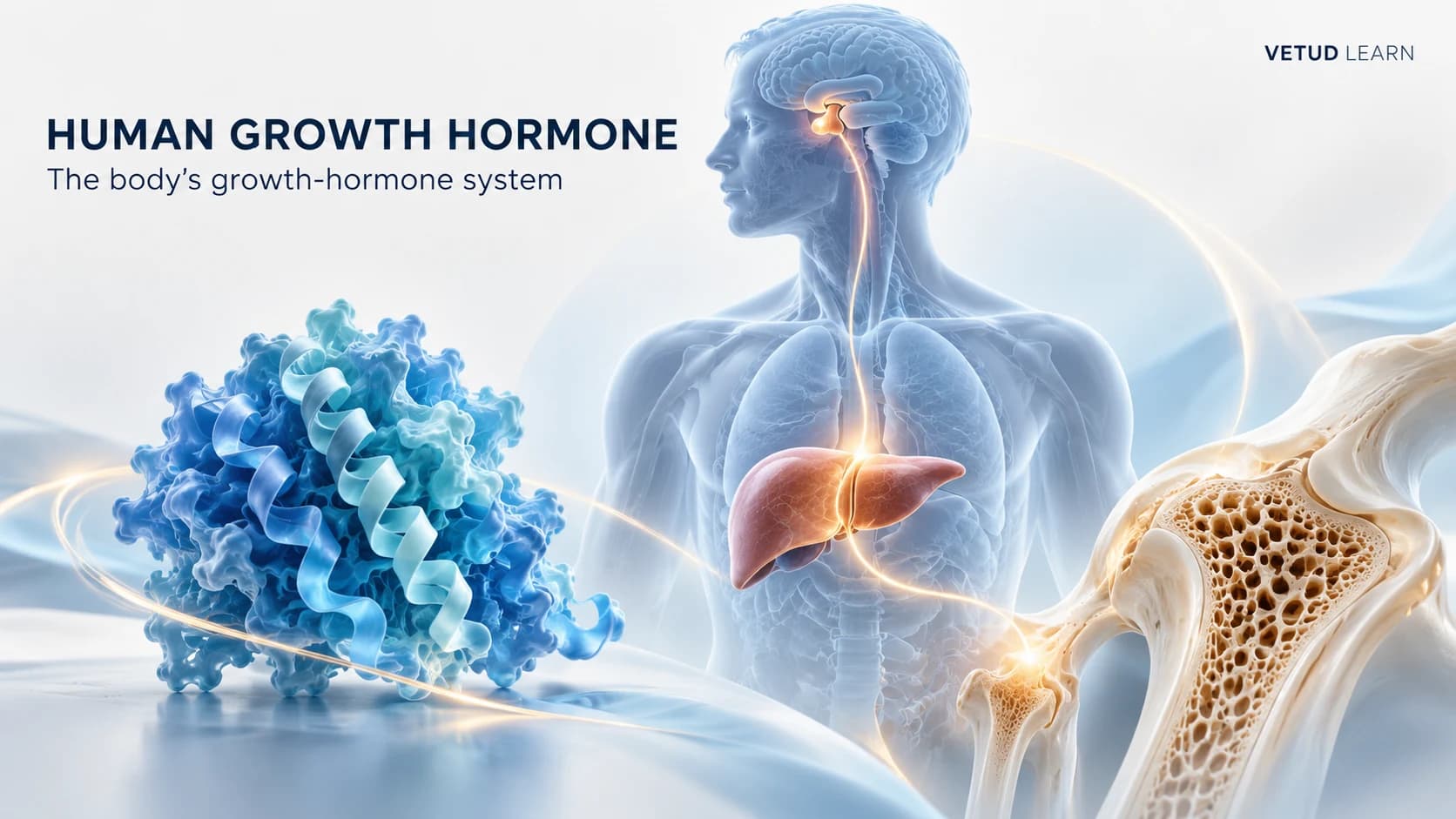
Growth hormone is an approved medicine for children with growth disorders and adults with a proven deficiency. Because levels fall with age, it has long been promoted as an anti-aging treatment, which is not an approved use. A systematic review measured what it does in healthy older people.
The researchers included randomized controlled trials in people with an average age of 50 or more who did not have a specific illness. They found 31 articles describing 18 separate study groups. In total, 220 participants received growth hormone, for 27 weeks on average.
Body composition shifted slightly: fat mass fell by 2.1 kg and lean mass, which includes muscle, rose by 2.1 kg. Body weight didn’t change. Total cholesterol fell a little, but not once body-composition changes were accounted for. Bone density did not change.
People on growth hormone were significantly more likely to have soft-tissue swelling, joint pain, carpal tunnel syndrome and gynecomastia (breast-tissue growth in men), and somewhat more likely to develop diabetes or raised fasting blood sugar.
Growth hormone works largely through IGF-1. IGF-1 LR3, a long-lasting lab version made for growing cells, has not been tested for safety in people at all. Peptides that raise the body’s own growth hormone are covered in our guide to growth-hormone releasers.
Growth-hormone research materials, where listed, are in the research shop for laboratory use; they are not the prescription medicine.
What does this mean?
In healthy older adults, growth hormone traded a little fat for a little lean mass, with no change in weight and a clear rise in side effects. The authors concluded it “cannot be recommended as an antiaging therapy”.
What don’t we know yet?
Most included studies were small, and some important outcomes were measured too rarely to combine. Long-term effects, including on cancer risk, were not established by these trials.
Watch and learn
Videos discussing the compounds in this article, plus background on the biology or the research methods. Each card explains its connection; recordings may predate the findings described here.
American Association of Clinical Endocrinology
Patient guide to growth hormone deficiency
An overview of growth hormone deficiency and specialist care. It does not establish anti-ageing benefits or benefits of growth-hormone-releasing research peptides.
Professional endocrinology association
Discusses the compound
Explains diagnosed growth hormone deficiency. This is different from claims about anti-ageing or unapproved growth-hormone-releasing compounds.
Ninja Nerd
Endocrinology: growth hormone
A detailed lesson on growth hormone physiology and its signalling pathways.
Medical physiology education
Discusses the compound
Discusses Growth hormone (HGH), IGF-1 LR3, CJC-1295 or its clinical context. Read the original studies linked here for the exact formulation, population and outcomes.
khanacademymedicine
The hypothalamus and pituitary gland
How the hypothalamus and pituitary coordinate hormone release, including growth and reproductive hormones.
Khan Academy · endocrine physiology
Related biology
Background on hypothalamus and pituitary signalling for understanding Growth hormone (HGH), IGF-1 LR3, CJC-1295. It does not demonstrate benefits of this compound or formulation.
Sources and references
- Systematic review: the safety and efficacy of growth hormone in the healthy elderlyLiu et al. · Annals of Internal Medicine · 2007
- Evaluation and treatment of adult growth hormone deficiency: an Endocrine Society clinical practice guidelineMolitch et al. · Journal of Clinical Endocrinology & Metabolism · 2011
VETUD Learn explains published research in plain language. It is general information, not medical advice. Talk to a doctor before starting, stopping or changing any treatment.
In the research shop
Check the catalog for related laboratory research materials. These products are separate from the approved medicines and clinical trial formulations discussed here.
Checking regional availability…