CJC-1295, ipamorelin and sermorelin: what the human studies actually tested
These peptides prompt the body to release its own growth hormone. The human research is short and small, and sometimes concerns a different version from the one sold online.
At a glance
- CJC-1295 (2006)
- Healthy adults: growth hormone rose 2 to 10 times for 6 days or more after one injection
- Ipamorelin (2014)
- 114 patients after bowel surgery: no significant benefit over placebo
- Sermorelin
- Once approved for children with growth hormone deficiency; no longer sold as an approved US medicine
- CJC-1295 + ipamorelin
- The pairing has been studied in mice, not in published human trials
- In sport
- Banned by WADA
The research, explained
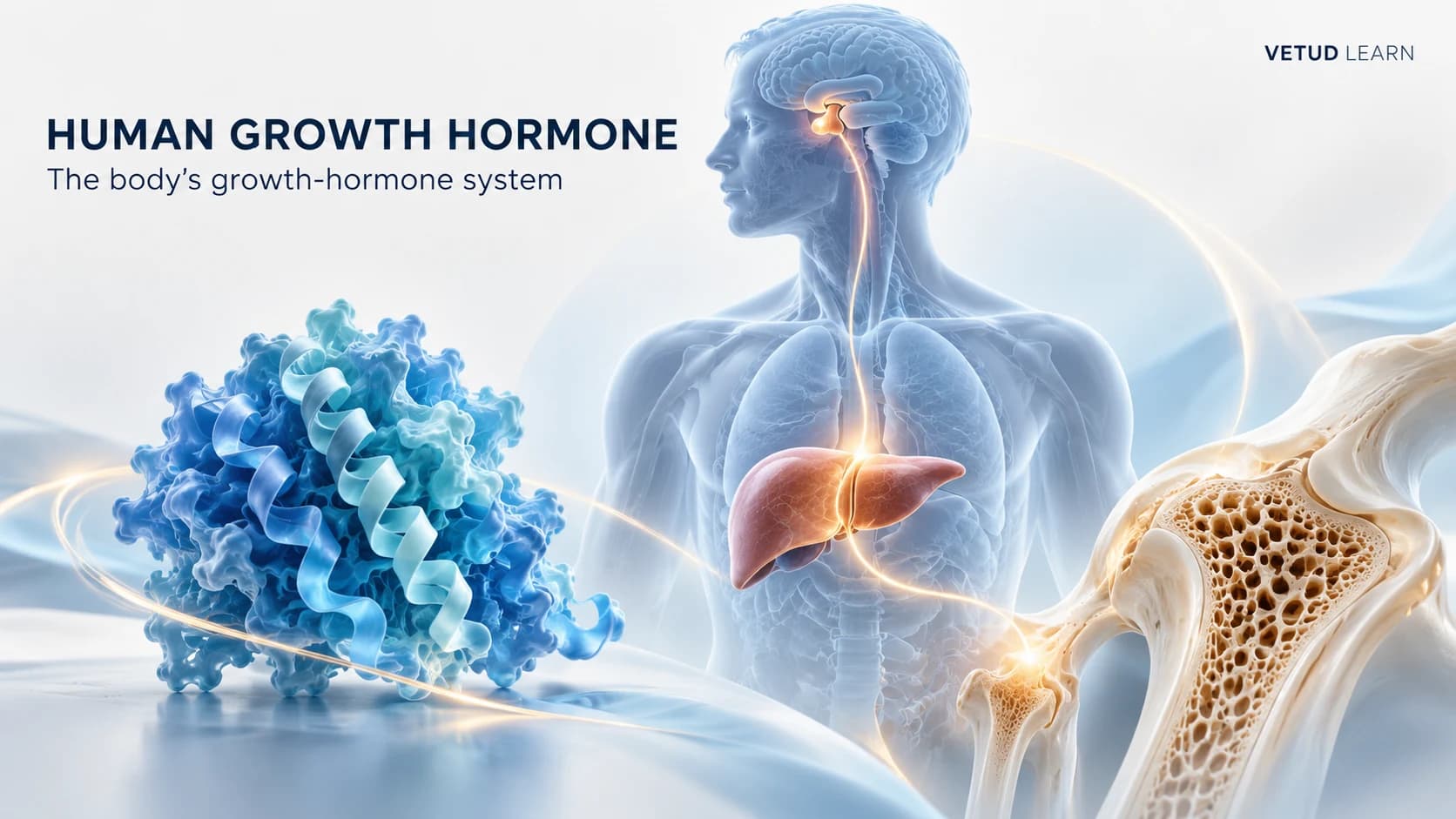
Growth hormone is released by the pituitary gland in pulses. Two signals push it up: GHRH from the brain and ghrelin, the “hunger hormone”. CJC-1295 and sermorelin copy GHRH. Ipamorelin copies ghrelin’s growth-hormone signal.
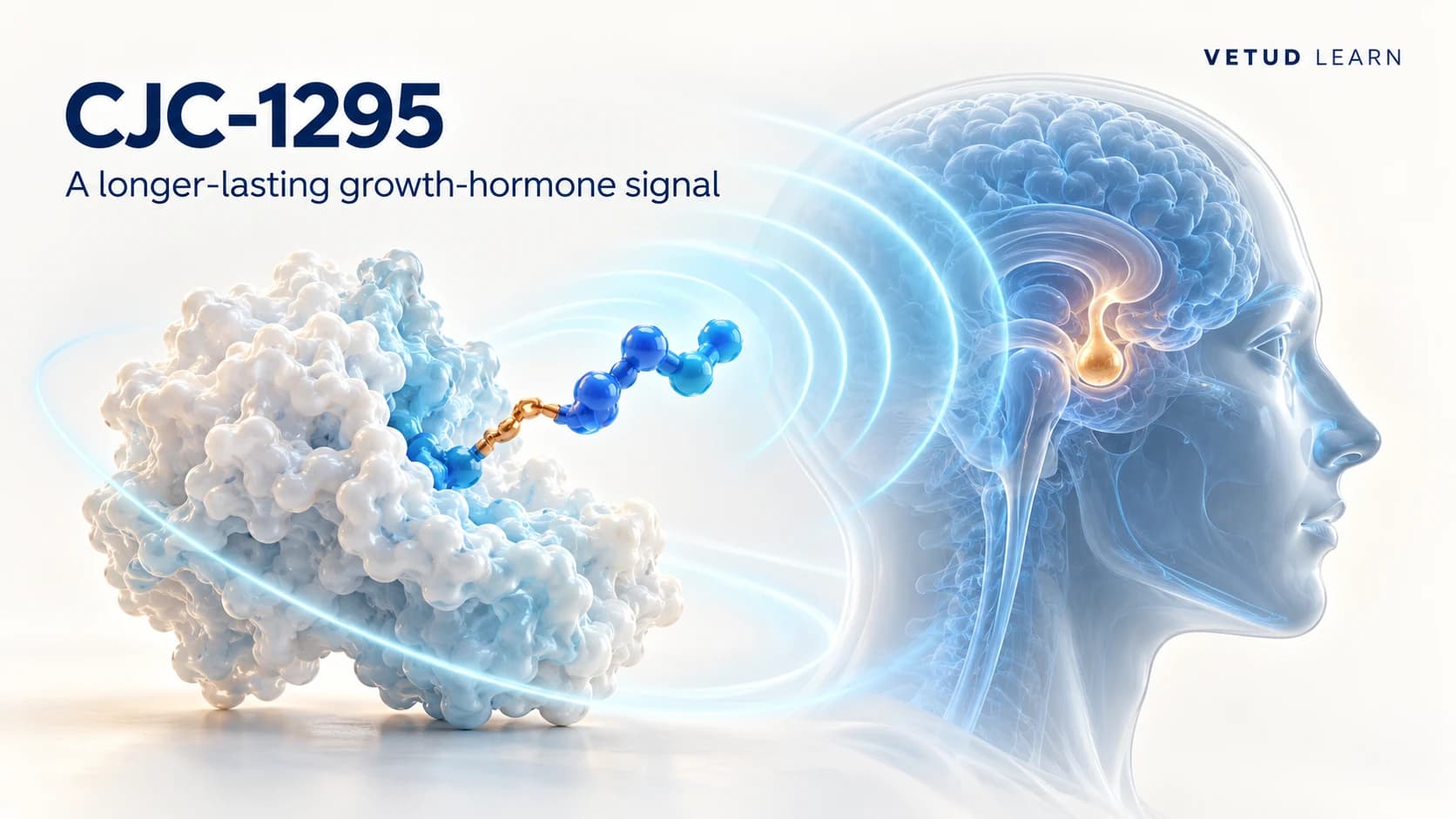
CJC-1295’s human data come from two small placebo-controlled studies in healthy adults, published in 2006 and lasting 28 and 49 days. After a single injection, growth hormone rose 2 to 10 times for six days or more, and IGF-1 rose 1.5 to 3 times for 9 to 11 days. The molecule lasted 5.8 to 8.1 days in the body, and no serious side effects were reported. The studies measured hormone levels, not muscle, fat or recovery.
That molecule carries a chemical “hook”, called DAC, which lets it attach to a blood protein and last for days. Products sold as “CJC-1295 without DAC” are a different, shorter-acting peptide, so the 2006 results don’t describe them. A 2026 endocrinology review lists the two forms separately.
Ipamorelin’s largest trial tested whether it could speed up recovery of the gut after bowel surgery. In 114 patients, the median time to a first tolerated meal was 25.3 hours on ipamorelin and 32.6 hours on placebo, a gap that could have been chance. The authors found no significant differences in the main or secondary results, and it was well tolerated.
The popular pairing of CJC-1295 with ipamorelin improved muscle measures in mice with steroid-induced muscle loss; a 2026 primer for orthopaedic surgeons notes those findings “are limited to animal studies”. A 2026 review of growth-hormone-axis peptides lists side effects reported across these compounds, including raised prolactin and cortisol, appetite changes, blood-sugar problems, fluid retention, and muscle and joint aches.
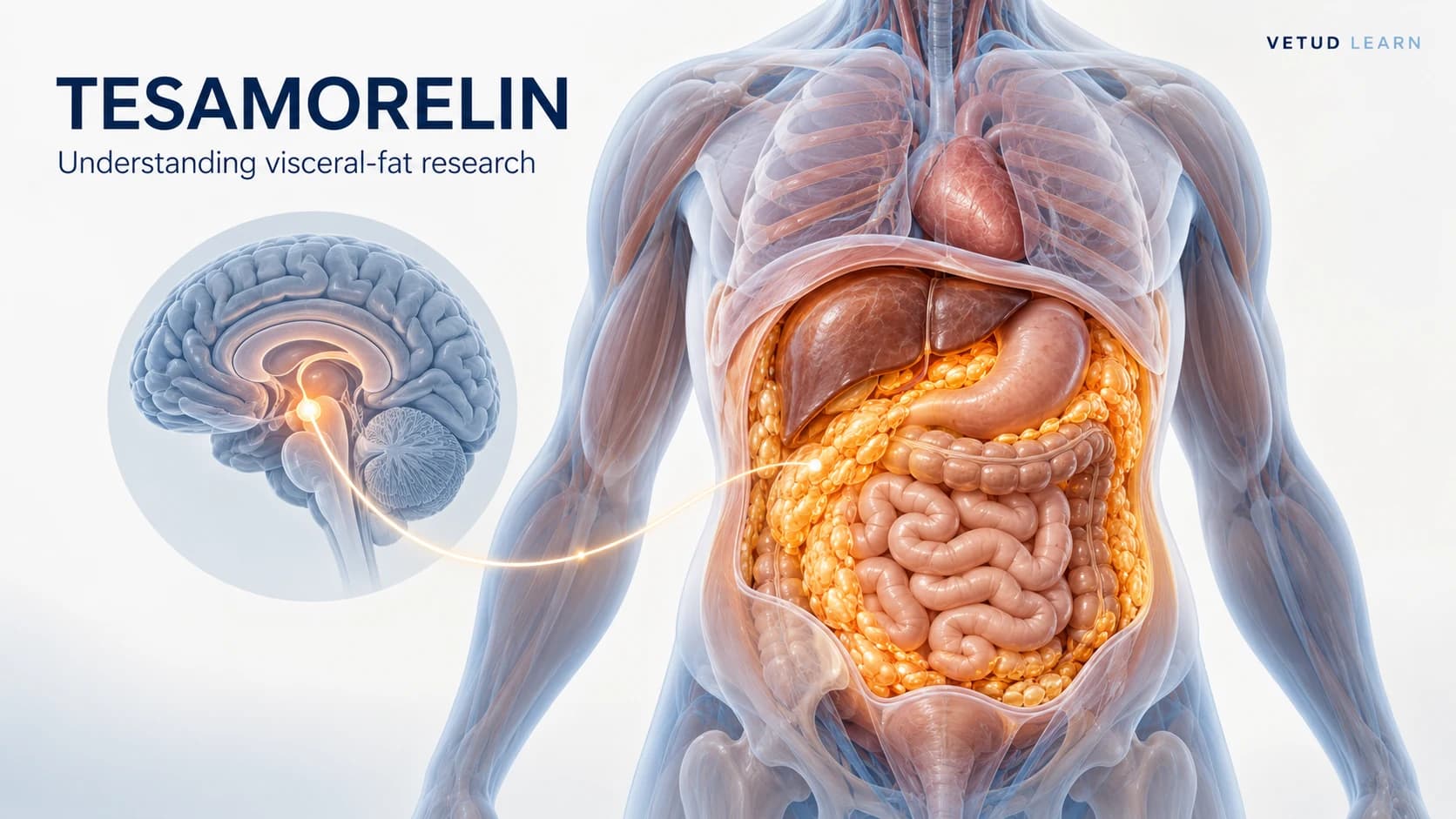
Approved options exist for diagnosed problems: growth hormone for proven deficiency and tesamorelin for one HIV-related use. Research materials for these peptides are listed in the research shop for laboratory use.
What does this mean?
The human evidence shows these peptides can raise hormone levels for a while. It does not show benefits for muscle, fat loss, recovery or aging.
What don’t we know yet?
The long-term effects of repeatedly raising growth hormone this way, the effects of combinations, and the safety of products sold outside regulated supply are unknown.
Watch and learn
Videos discussing the compounds in this article, plus background on the biology or the research methods. Each card explains its connection; recordings may predate the findings described here.
U.S. Food and Drug Administration
FDA compounding meeting: CJC-1295, AOD-9604 and thymosin alpha-1
The original discussion of these substances and proposed uses. Committee advice is separate from a final regulatory decision.
Official FDA recording · December 4, 2024
Official regulatory recording
Historical FDA discussion of CJC-1295, AOD-9604 and thymosin alpha-1. An advisory meeting is not approval or evidence of clinical benefit.
U.S. Food and Drug Administration
FDA compounding meeting: ipamorelin and kisspeptin-10
Full advisory meeting covering ipamorelin and kisspeptin-10 among other substances. This is a historical regulatory discussion, not an approval.
Official FDA recording · October 29, 2024
Official regulatory recording
Historical FDA discussion from October 2024. Kisspeptin-10 and ipamorelin are covered; other forms and later decisions may differ.
khanacademymedicine
The hypothalamus and pituitary gland
How the hypothalamus and pituitary coordinate hormone release, including growth and reproductive hormones.
Khan Academy · endocrine physiology
Related biology
Background on hypothalamus and pituitary signalling for understanding CJC-1295, Ipamorelin, Sermorelin. It does not demonstrate benefits of this compound or formulation.
Sources and references
- Prolonged stimulation of growth hormone (GH) and insulin-like growth factor I secretion by CJC-1295, a long-acting analog of GH-releasing hormone, in healthy adultsTeichman et al. · Journal of Clinical Endocrinology & Metabolism · 2006
- Prospective, randomized, controlled, proof-of-concept study of the ghrelin mimetic ipamorelin for the management of postoperative ileus in bowel resection patientsBeck et al. · International Journal of Colorectal Disease · 2014
- Sermorelin: a review of its use in the diagnosis and treatment of children with idiopathic growth hormone deficiencyPrakash & Goa · BioDrugs · 1999
- Injectable Peptide Therapy: A Primer for Orthopaedic and Sports Medicine PhysiciansMayfield et al. · American Journal of Sports Medicine · 2026
- The emerging landscape of performance-enhancing peptides modulating GH-IGF1 axisDominikowski et al. · Frontiers in Endocrinology · 2026
VETUD Learn explains published research in plain language. It is general information, not medical advice. Talk to a doctor before starting, stopping or changing any treatment.
In the research shop
Check the catalog for related laboratory research materials. These products are separate from the approved medicines and clinical trial formulations discussed here.
Checking regional availability…