Tesamorelin cut deep belly fat by 15% in its main trial
The growth-hormone-releasing medicine is approved for a narrow use in people with HIV. A later trial measured liver fat too.
The study at a glance
- Who took part
- 412 adults with HIV and excess abdominal fat (86% men)
- How it was tested
- Daily injection or placebo for 26 weeks; fat measured on CT scans
- Result
- Visceral fat −15.2% on tesamorelin vs +5.0% on placebo
- Liver-fat trial
- 61 people with HIV and fatty liver: 35% vs 4% reached normal liver fat after 12 months
- Status
- Approved in the US (Egrifta) for a specific HIV-related use
The research, explained
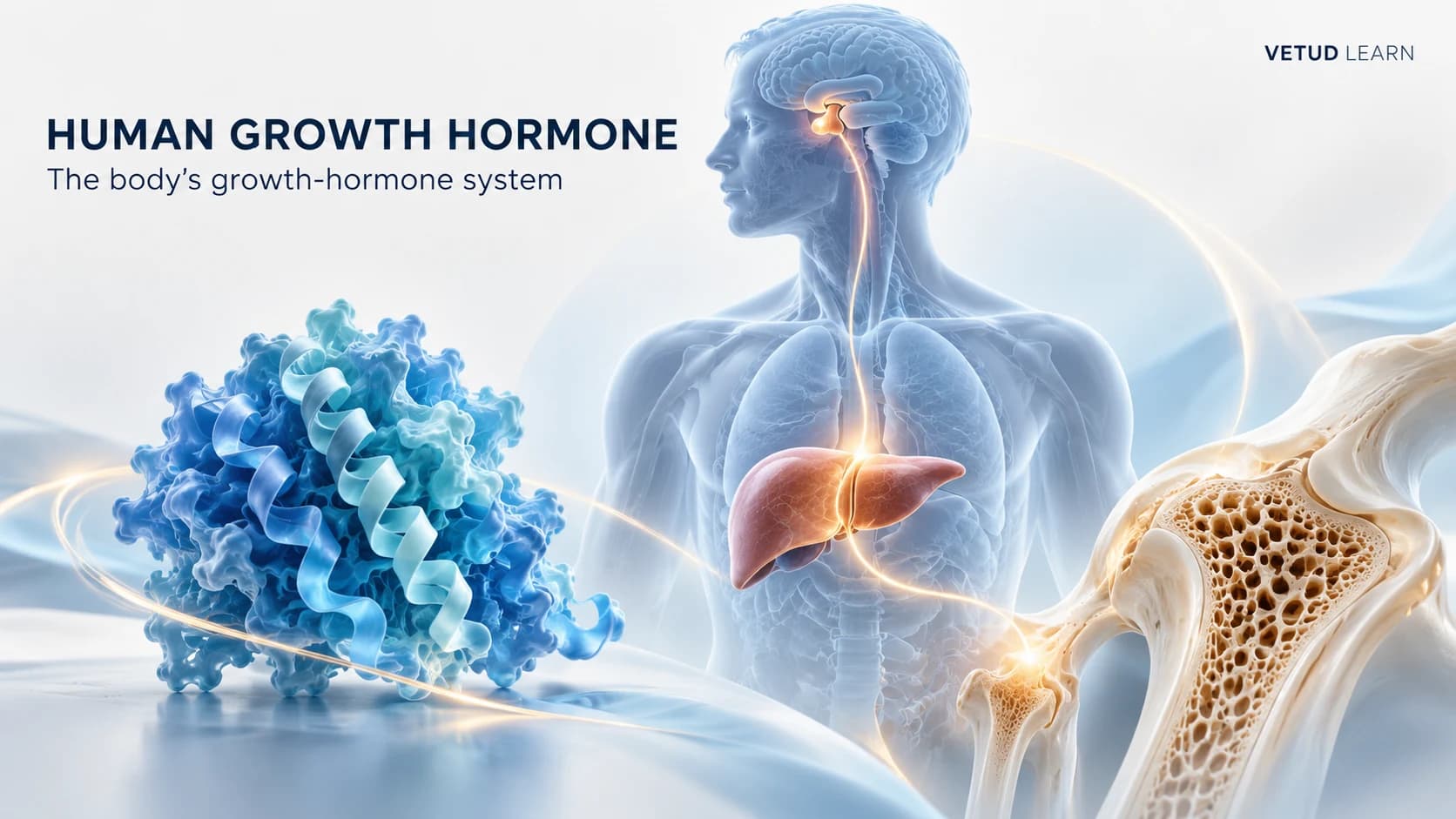
Tesamorelin is a stabilized copy of growth-hormone-releasing hormone, the brain signal that tells the pituitary gland to release growth hormone. Unlike most peptides in this family, it has been through large trials and is an approved medicine.
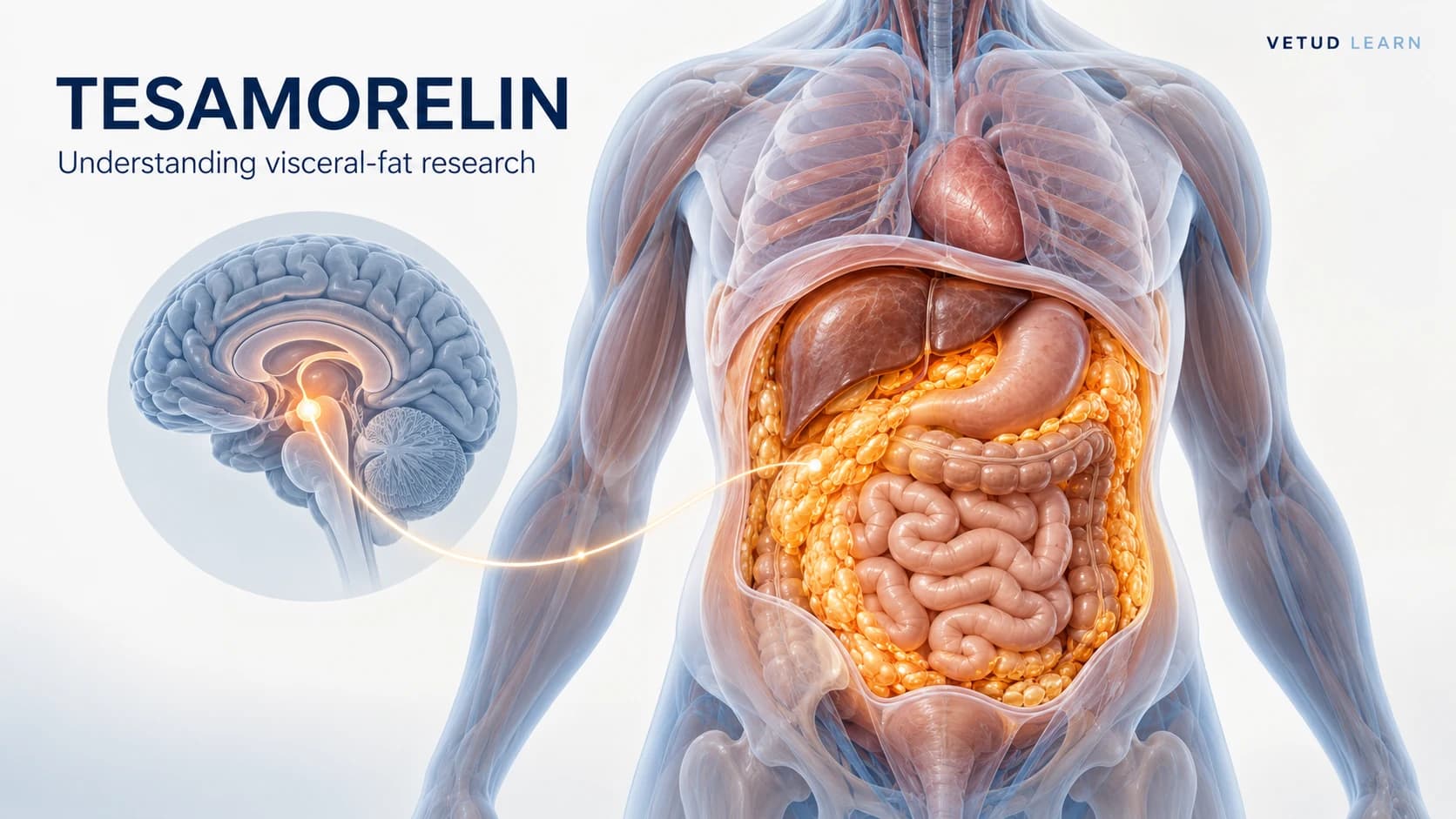
Some people on HIV treatment build up visceral fat, the deep fat around the organs that is linked to heart risk. In a trial published in 2007, 412 such patients were randomly assigned to daily tesamorelin or placebo for 26 weeks. CT scans showed visceral fat fell by 15.2% on tesamorelin and rose by 5.0% on placebo.
Blood fats improved too: triglycerides fell by 50 mg per deciliter on tesamorelin and rose by 9 on placebo. IGF-1, a marker of growth hormone activity, rose by 81%. Blood-sugar measures did not differ significantly. Overall side effects were similar, but more people on tesamorelin left the study because of one.
A second trial, published in 2019, followed 61 people with HIV and fatty liver disease for 12 months. Compared with placebo, liver fat fell by an extra 4.1 percentage points, a 37% relative reduction from the starting level. By the end, 35% of people on tesamorelin had liver fat below 5%, the usual threshold for fatty liver, compared with 4% on placebo. Injection-site complaints were more common on tesamorelin.
These results come from people with HIV, and the approval covers that narrow use. They don’t show that tesamorelin is a general weight-loss or body-building treatment.
See how it compares with other growth-hormone signals in our guide to CJC-1295, ipamorelin and sermorelin. Laboratory research material is listed in the research shop, separate from the approved medicine.
What does this mean?
Tesamorelin is one of the few peptides in its family with large placebo-controlled trials, and its effect on deep belly fat is well documented in people with HIV.
What don’t we know yet?
How the results apply outside HIV, and the long-term effects on liver health and heart outcomes, need further study. The liver trial’s authors called for longer studies of liver tissue.
Watch and learn
Videos discussing the compounds in this article, plus background on the biology or the research methods. Each card explains its connection; recordings may predate the findings described here.
U.S. Food and Drug Administration
FDA compounding meeting: CJC-1295, AOD-9604 and thymosin alpha-1
The original discussion of these substances and proposed uses. Committee advice is separate from a final regulatory decision.
Official FDA recording · December 4, 2024
Official regulatory recording
Historical FDA discussion of CJC-1295, AOD-9604 and thymosin alpha-1. An advisory meeting is not approval or evidence of clinical benefit.
khanacademymedicine
The hypothalamus and pituitary gland
How the hypothalamus and pituitary coordinate hormone release, including growth and reproductive hormones.
Khan Academy · endocrine physiology
Related biology
Background on hypothalamus and pituitary signalling for understanding Tesamorelin, CJC-1295, Sermorelin. It does not demonstrate benefits of this compound or formulation.
American Association of Clinical Endocrinology
Patient guide to growth hormone deficiency
An overview of growth hormone deficiency and specialist care. It does not establish anti-ageing benefits or benefits of growth-hormone-releasing research peptides.
Professional endocrinology association
Related biology
Explains diagnosed growth hormone deficiency. This is different from claims about anti-ageing or unapproved growth-hormone-releasing compounds.
Sources and references
- Metabolic effects of a growth hormone-releasing factor in patients with HIVFalutz et al. · New England Journal of Medicine · 2007
- Effects of tesamorelin on non-alcoholic fatty liver disease in HIV: a randomised, double-blind, multicentre trialStanley et al. · Lancet HIV · 2019
- Egrifta SV prescribing informationFDA-approved labeling · DailyMed
VETUD Learn explains published research in plain language. It is general information, not medical advice. Talk to a doctor before starting, stopping or changing any treatment.
In the research shop
Check the catalog for related laboratory research materials. These products are separate from the approved medicines and clinical trial formulations discussed here.
Checking regional availability…