IGF-1 LR3: what the research shows
A long-lasting lab version of IGF-1, the hormone growth hormone works through.
Also known as Long R3 IGF-1
At a glance
Not approved. A lab version of IGF-1 used mainly in cell culture. A different form of IGF-1, mecasermin, is approved for a rare growth disorder.
What is IGF-1 LR3?
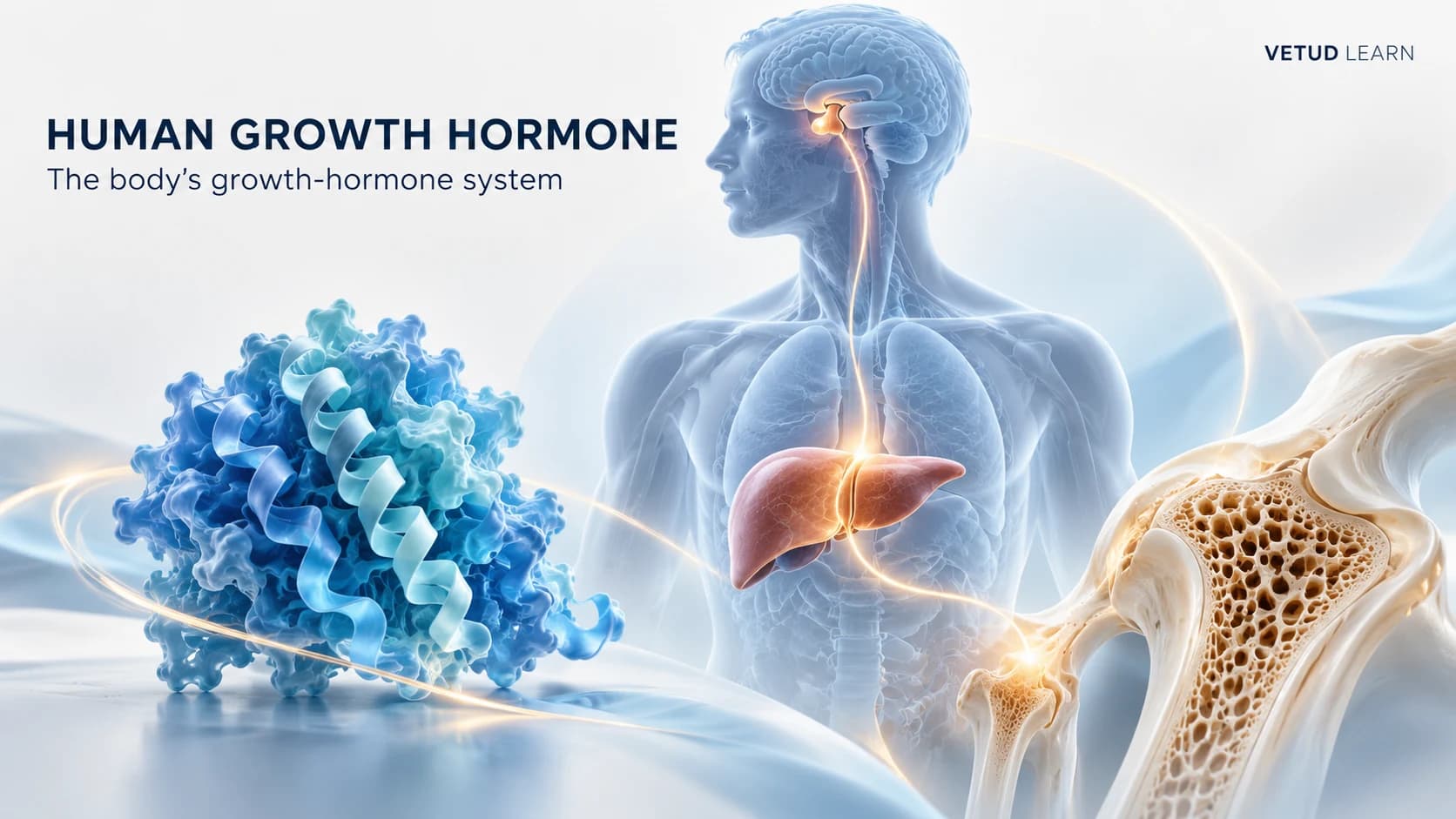
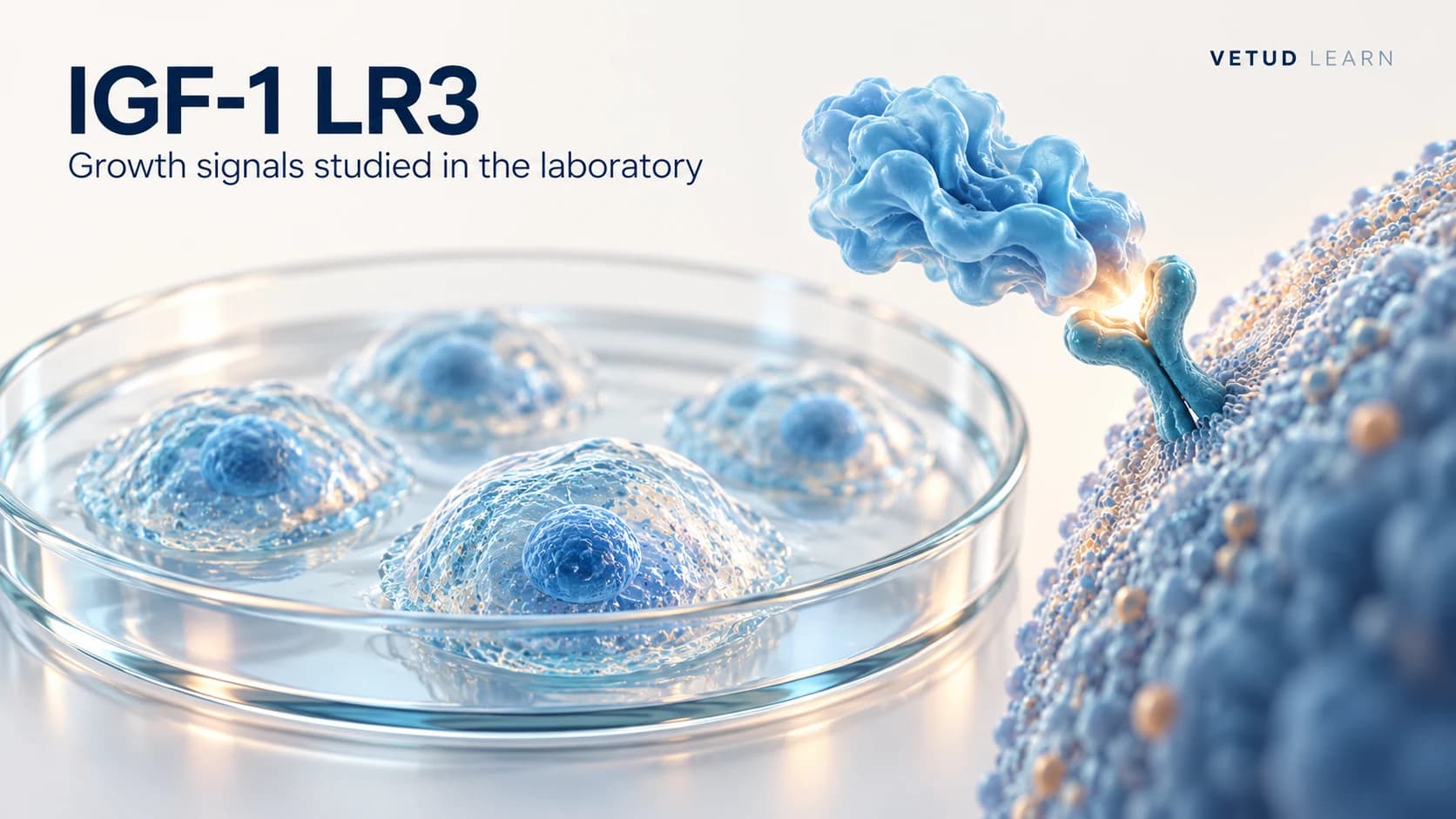
IGF-1 is the hormone that carries out much of growth hormone’s work. IGF-1 LR3 is a modified version with extra building blocks that make it last much longer. It was developed for growing cells in laboratories.
How does IGF-1 LR3 work?
It acts on the same receptor as natural IGF-1, but blood proteins that normally hold IGF-1 in check barely bind it, so it stays active longer.
What does the research show?
- In a 2025 study in growth-restricted unborn lambs, IGF-1 LR3 did not improve growth.
- The approved medicine mecasermin (natural IGF-1) is used for children with severe primary IGF-1 deficiency.
Known risks and side effects
- IGF-1 can cause low blood sugar.
- IGF-1 LR3 has not been tested for safety in people, and it is banned in sport.
Is IGF-1 LR3 approved?
Mostly studied in cells and animals, with little or no proper testing in people.
Not approved. A lab version of IGF-1 used mainly in cell culture. A different form of IGF-1, mecasermin, is approved for a rare growth disorder.
From the community
Watch: IGF-1 LR3 and related science
We have not selected a reliable dedicated IGF-1 LR3 video. These lessons cover the relevant biology and research methods; the compound-specific evidence is in the sources below.
khanacademymedicine
The hypothalamus and pituitary gland
How the hypothalamus and pituitary coordinate hormone release, including growth and reproductive hormones.
Khan Academy · endocrine physiology
Related biology
Background on hypothalamus and pituitary signalling for understanding IGF-1 LR3. It does not demonstrate benefits of this compound or formulation.
American Association of Clinical Endocrinology
Patient guide to growth hormone deficiency
An overview of growth hormone deficiency and specialist care. It does not establish anti-ageing benefits or benefits of growth-hormone-releasing research peptides.
Professional endocrinology association
Related biology
Explains diagnosed growth hormone deficiency. This is different from claims about anti-ageing or unapproved growth-hormone-releasing compounds.
Ninja Nerd
Endocrinology: growth hormone
A detailed lesson on growth hormone physiology and its signalling pathways.
Medical physiology education
Related biology
Background on growth hormone physiology for understanding IGF-1 LR3. It does not demonstrate benefits of this compound or formulation.
Sources and references
- IGF-1 LR3 does not promote growth in late-gestation growth-restricted fetal sheepWhite et al. · American Journal of Physiology: Endocrinology and Metabolism · 2025
- Profile of mecasermin for the long-term treatment of growth failure in children and adolescents with severe primary IGF-1 deficiencyFintini et al. · Therapeutics and Clinical Risk Management · 2009
VETUD Learn explains published research in plain language. It is general information, not medical advice. Talk to a doctor before starting, stopping or changing any treatment.
In the research shop
Check the catalog for related laboratory research materials. These products are separate from the approved medicines and clinical trial formulations discussed here.
Checking regional availability…