Melanotan I & II: what the research shows
The “tanning peptides”. One is an approved medicine for a rare disease; the other is an unapproved tanning injection that doctors warn about.
Also known as Afamelanotide (Melanotan I)
At a glance
69 h
pain-free time in daylight over 6 months (Melanotan I)
US trial in a rare light-sensitivity disease · placebo: 41 h
Melanotan I (afamelanotide) is approved as Scenesse for a rare light-sensitivity disease. Melanotan II is not approved anywhere, and health agencies warn against tanning injections.
What is Melanotan I & II?
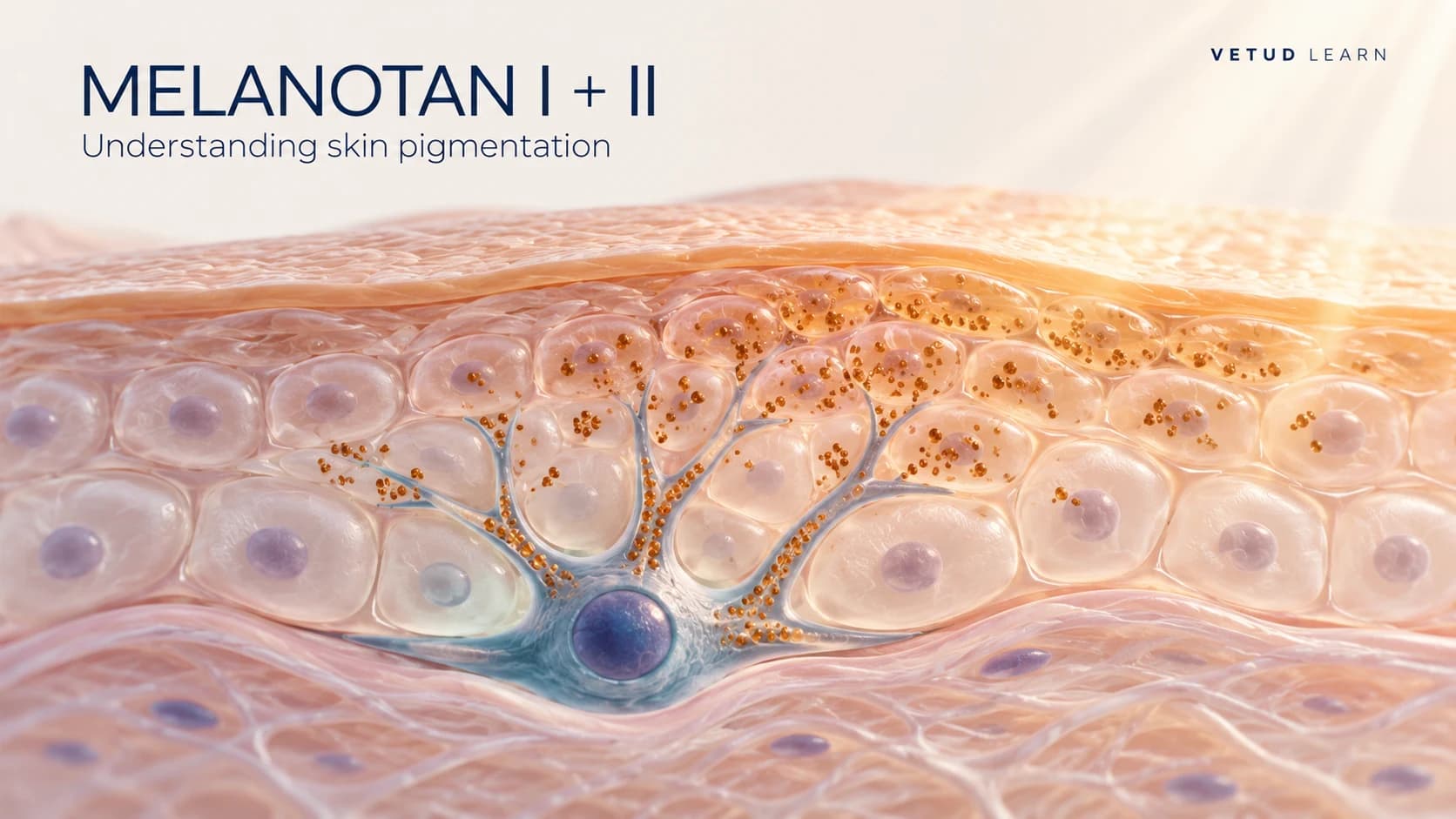
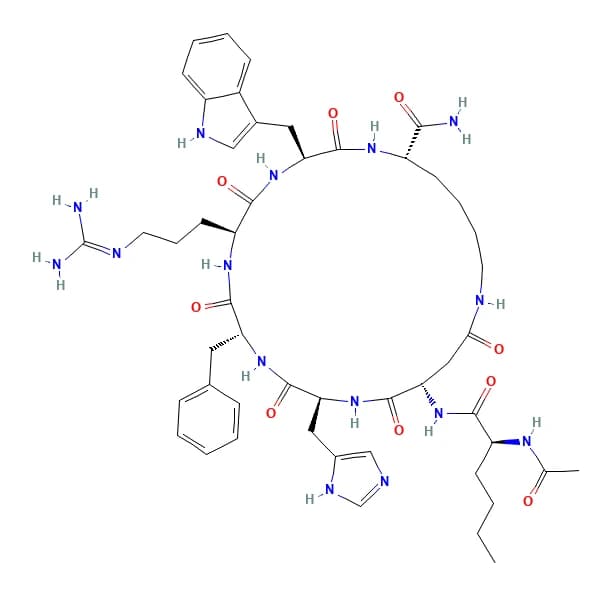
Both are lab-made versions of alpha-MSH, the hormone that tells skin to make melanin, the pigment that darkens skin.
How does Melanotan I & II work?
They switch on receptors in the skin’s pigment cells, darkening skin without sunlight. Melanotan II also acts on receptors in the brain, which is why it can affect appetite and sexual arousal.
What does the research show?
- Afamelanotide (Melanotan I) helps people with erythropoietic protoporphyria, a rare condition that makes sunlight painful. In a US trial they spent a median of 69 hours pain-free in daylight over 6 months, compared with 41 hours on placebo.
- Melanotan II was only tested in tiny early studies in the 1990s, for example a safety study in three men.
Known risks and side effects
- In the first small human study of Melanotan II, men reported nausea, tiredness, and spontaneous erections lasting up to five hours.
- Doctors have reported serious problems in people using it, including melanoma (skin cancer) and kidney damage.
- Tanning injections bought online are unregulated.
Is Melanotan I & II approved?
Mostly studied in cells and animals, with little or no proper testing in people.
Melanotan I (afamelanotide) is approved as Scenesse for a rare light-sensitivity disease. Melanotan II is not approved anywhere, and health agencies warn against tanning injections.
From the community
Watch: Melanotan I & II and related science
Start with the compound discussion, then use the background lesson to understand its biology. Each card explains its connection. Recordings may predate later findings or regulatory changes.
Dr Dray
Melanotan II: the truth about the viral “Barbie drug”
A dermatologist on why tanning injections worry skin doctors.
Andrea Suarez, MD, dermatologist
Discusses the compound
Discusses Melanotan I & II or its clinical context. Read the original studies linked here for the exact formulation, population and outcomes.
National Institute of Mental Health
Clinical research: risks and benefits
Why an experimental treatment can involve uncertainty even when its scientific rationale sounds promising.
NIMH · US National Institutes of Health
Research skills
Helps you judge the study design or uncertainty in Melanotan I & II research; it is not a trial of the compound.
Sources and references
- Afamelanotide for Erythropoietic ProtoporphyriaLangendonk et al. · New England Journal of Medicine · 2015
- Evaluation of melanotan-II in a pilot phase-I clinical studyDorr et al. · Life Sciences · 1996
- Melanoma associated with the use of melanotan-IIHjuler & Lorentzen · Dermatology · 2014
- Melanotan II: a possible cause of renal infarctionPeters et al. · CEN Case Reports · 2020
VETUD Learn explains published research in plain language. It is general information, not medical advice. Talk to a doctor before starting, stopping or changing any treatment.
In the research shop
Check the catalog for related laboratory research materials. These products are separate from the approved medicines and clinical trial formulations discussed here.
Checking regional availability…