PT-141 became a medicine for low desire. The effect was modest
Two phase 3 trials of bremelanotide in 1,267 women found small but significant gains in desire and less distress, with frequent nausea.

The study at a glance
- Who took part
- 1,267 premenopausal women with hypoactive sexual desire disorder
- How it was tested
- Two identical trials (RECONNECT): injection under the skin as needed, or placebo, for 24 weeks
- Desire
- +0.30 and +0.42 points more than placebo, on a scale from 1.2 to 6
- Distress
- −0.37 and −0.29 points more than placebo, on a scale from 0 to 4
- Side effects
- Nausea, flushing and headache, each in 10% or more of women
The research, explained
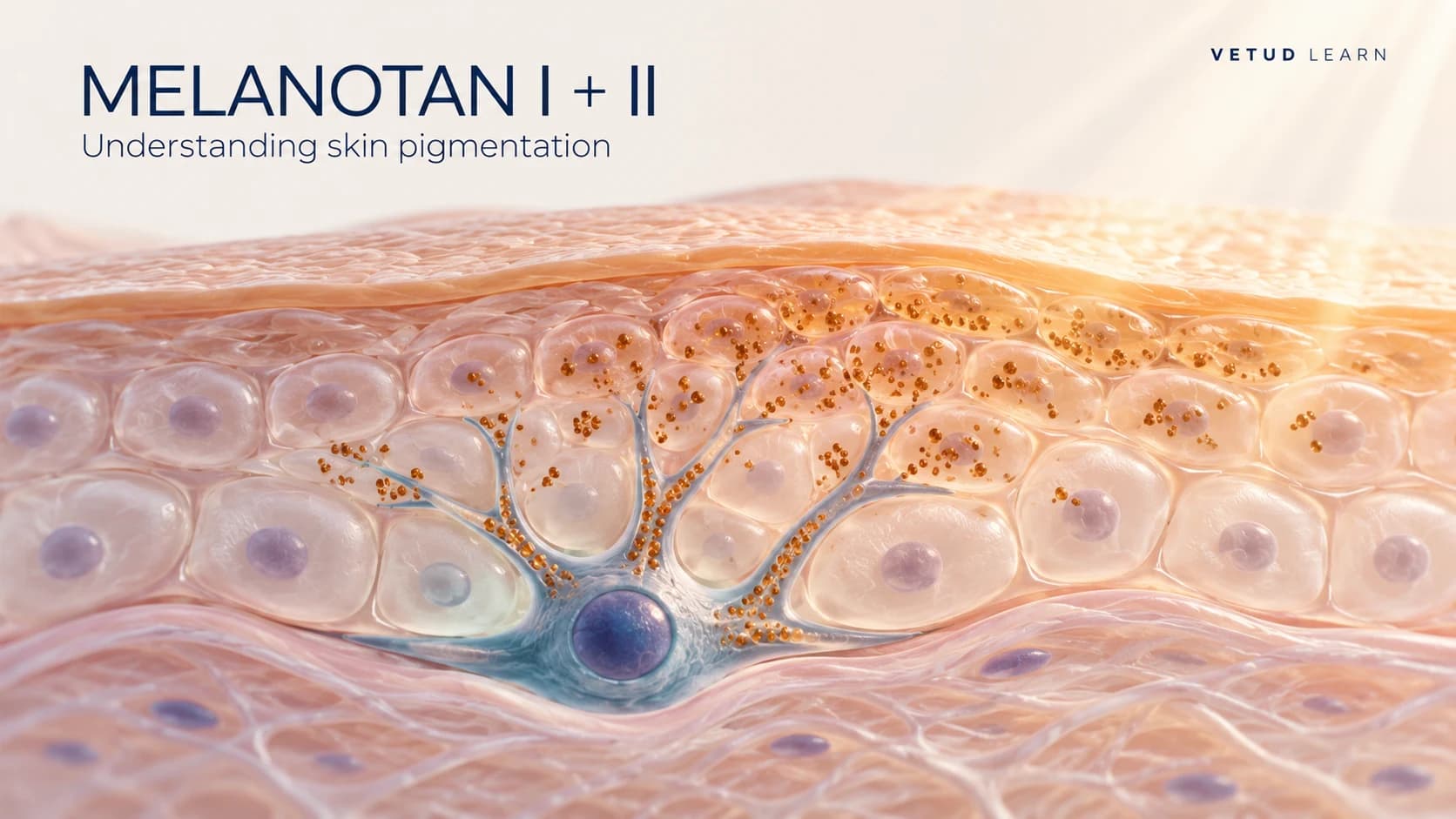
PT-141, now called bremelanotide, came out of the research that produced the tanning peptide Melanotan II. Instead of working on blood flow like Viagra, it acts on melanocortin receptors in the brain that are involved in desire.
Its approval rested on two identical phase 3 trials, called RECONNECT, run in 2015 and 2016. In total, 1,267 premenopausal women with hypoactive sexual desire disorder, persistently low desire that causes distress, were randomly assigned to bremelanotide or placebo for 24 weeks, injected under the skin as needed.
Desire was measured with a questionnaire scored from 1.2 to 6. Compared with placebo, desire scores rose by an extra 0.30 points in one trial and 0.42 in the other. Distress about low desire, scored from 0 to 4, fell by 0.37 and 0.29 points more than on placebo. All the differences were statistically significant.
Nausea, flushing and headache each affected 10% or more of women on bremelanotide in both studies, more than on placebo. Most side effects were mild or moderate.
The trials were funded by the drug’s developers. Most participants were white (85.6%) and almost all were at US sites (96.6%). The FDA approved bremelanotide as Vyleesi in 2019.
Compare it with its unapproved relative in our guide to the Melanotan peptides. PT-141 research material, where listed, is in the research shop, separate from the approved medicine.
What does this mean?
Bremelanotide works on average, but the gain on these scales is small and nausea is common. For some women that trade-off is worthwhile; for others it isn’t.
What don’t we know yet?
The trials lasted 24 weeks in premenopausal women. Longer use, and effects in postmenopausal women or in men, were not tested here.
Watch and learn
Videos discussing the compounds in this article, plus background on the biology or the research methods. Each card explains its connection; recordings may predate the findings described here.
Rena Malik, M.D.
Bremelanotide (PT-141) and sexual desire
A clinician explains bremelanotide and sexual-health research. Approved indications and investigational uses should be distinguished.
Rena Malik, MD · urologist
Discusses the compound
Discusses PT-141, Melanotan I & II or its clinical context. Read the original studies linked here for the exact formulation, population and outcomes.
Dr Dray
Melanotan II: the truth about the viral “Barbie drug”
A dermatologist on why tanning injections worry skin doctors.
Andrea Suarez, MD, dermatologist
Discusses the compound
Discusses PT-141, Melanotan I & II or its clinical context. Read the original studies linked here for the exact formulation, population and outcomes.
National Institute of Mental Health
Clinical research: risks and benefits
Why an experimental treatment can involve uncertainty even when its scientific rationale sounds promising.
NIMH · US National Institutes of Health
Research skills
Helps you judge the study design or uncertainty in PT-141, Melanotan I & II research; it is not a trial of the compound.
Sources and references
- Bremelanotide for the Treatment of Hypoactive Sexual Desire Disorder: Two Randomized Phase 3 TrialsKingsberg et al. · Obstetrics & Gynecology · 2019
VETUD Learn explains published research in plain language. It is general information, not medical advice. Talk to a doctor before starting, stopping or changing any treatment.
In the research shop
Check the catalog for related laboratory research materials. These products are separate from the approved medicines and clinical trial formulations discussed here.
Checking regional availability…