AHK-Cu: what the research shows
A copper-carrying peptide, cousin of GHK-Cu, studied for hair growth.
Also known as Copper tripeptide-1
At a glance
Used in some hair and skin products as a cosmetic ingredient. Not a medicine.
What is AHK-Cu?
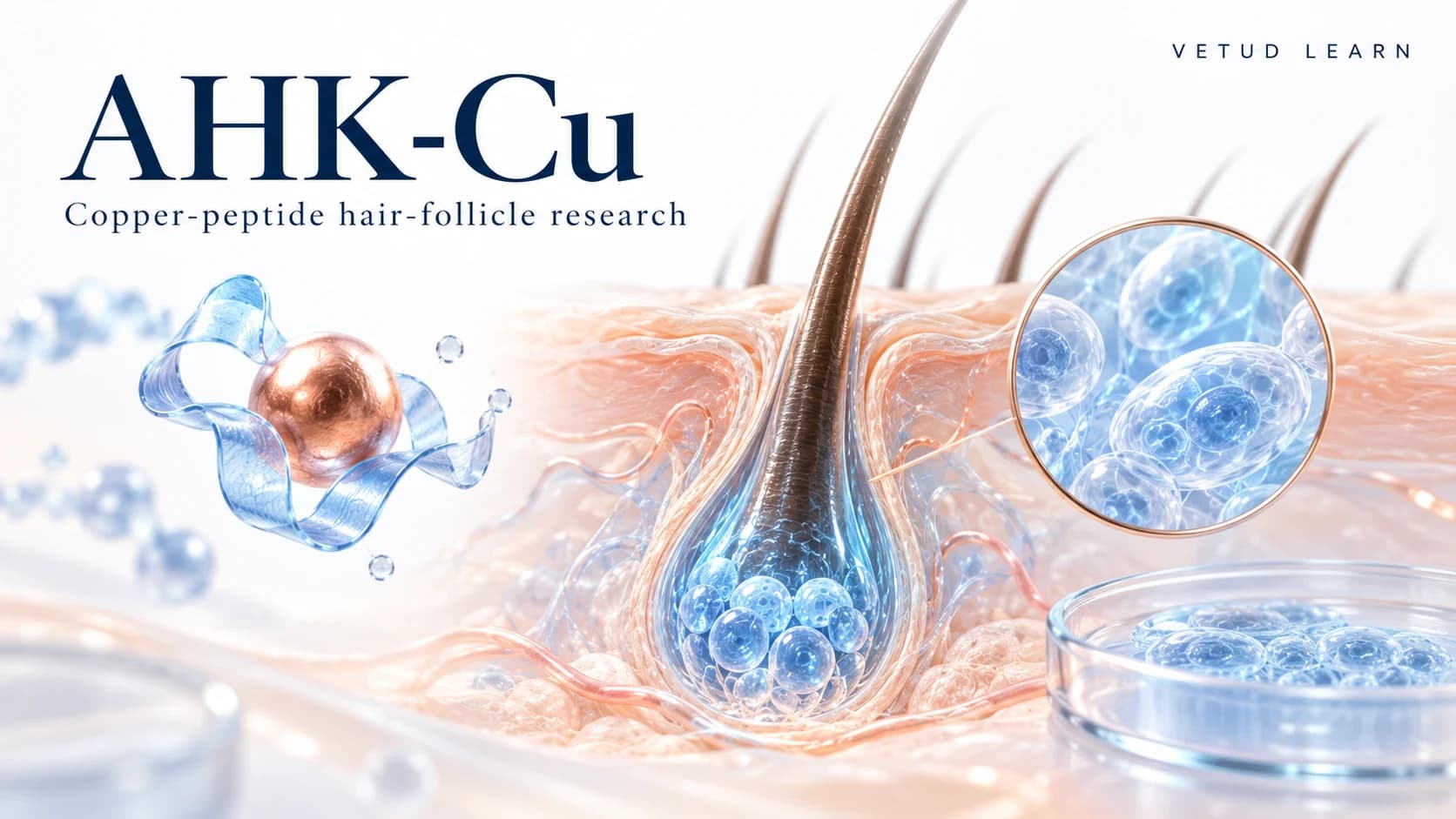
AHK-Cu is a tiny peptide of three building blocks (alanine, histidine and lysine) holding a copper atom. It is closely related to GHK-Cu.
How does AHK-Cu work?
In lab studies, it encouraged hair follicles to lengthen and the cells at their base, which drive hair growth, to multiply.
What does the research show?
- In a 2007 lab study, AHK-Cu made human hair follicles grown in a dish lengthen faster.
- There are no good clinical trials of AHK-Cu on people’s hair.
Known risks and side effects
- Its effects in people are not well studied.
Is AHK-Cu approved?
Mostly studied in cells and animals, with little or no proper testing in people.
Used in some hair and skin products as a cosmetic ingredient. Not a medicine.
From the community
Watch: AHK-Cu and related science
We have not selected a reliable dedicated AHK-Cu video. These lessons cover the relevant biology and research methods; the compound-specific evidence is in the sources below.
TED-Ed
Why do some people go bald?
An animated explanation of hair growth and hair loss, providing context for reading hair-research claims.
Lesson by Sarthak Sinha · hair-follicle biology
Related biology
Background on hair-follicle biology for understanding AHK-Cu. It does not demonstrate benefits of this compound or formulation.
National Institute of Mental Health
Different types of clinical research
An introduction to the different questions and designs used in studies involving people.
NIMH · US National Institutes of Health
Research skills
Helps you judge the study design or uncertainty in AHK-Cu research; it is not a trial of the compound.
Sources and references
- The effect of tripeptide-copper complex on human hair growth in vitroPyo et al. · Archives of Pharmacal Research · 2007
VETUD Learn explains published research in plain language. It is general information, not medical advice. Talk to a doctor before starting, stopping or changing any treatment.
In the research shop
Check the catalog for related laboratory research materials. These products are separate from the approved medicines and clinical trial formulations discussed here.
Checking regional availability…