Liraglutide: what the research shows
The older, once-a-day cousin of semaglutide, and the first GLP-1 medicine approved for weight management.
Also known as Victoza, Saxenda

At a glance
8.4 kg
average weight lost in 56 weeks
SCALE trial, 3,731 adults · placebo: 2.8 kg
Approved for type 2 diabetes (Victoza, US 2010) and for weight management (Saxenda, US 2014).
What is Liraglutide?
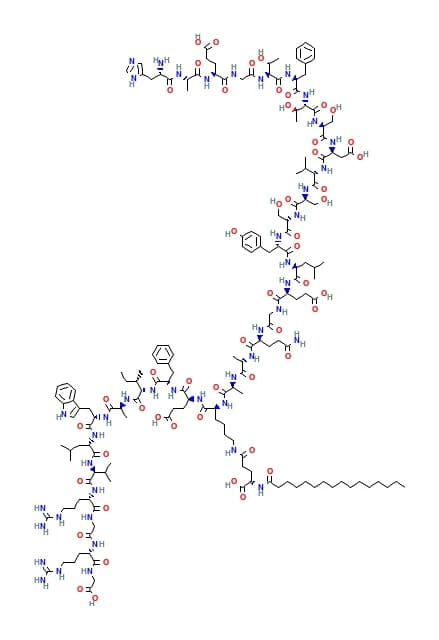
Liraglutide is an earlier copy of the gut hormone GLP-1. It lasts about a day in the body, so it is injected once daily.
How does Liraglutide work?
Like other GLP-1 medicines, it makes you feel full sooner, slows your stomach and helps control blood sugar.
What does the research show?
- In the SCALE trial, 3,731 adults without diabetes took liraglutide or a placebo for 56 weeks, alongside diet and exercise advice. People on liraglutide lost 8.4 kg on average, compared with 2.8 kg on placebo.
- 63% of people on liraglutide lost at least 5% of their body weight, compared with 27% on placebo.
- In the LEADER trial in people with type 2 diabetes, liraglutide lowered the risk of heart attack, stroke or heart-related death.
Known risks and side effects
- Stomach side effects are common: nausea, diarrhea, vomiting and constipation, especially while the dose is being raised.
- Less common but serious problems include inflammation of the pancreas (pancreatitis) and gallbladder problems.
- In the US the label warns about a type of thyroid tumor seen in rodents, so people with a family history of medullary thyroid cancer are told not to use it.
- Weight usually comes back after the medicine is stopped.
Is Liraglutide approved?
A medicines regulator, such as the FDA in the US or the EMA in Europe, has approved it for specific uses.
Approved for type 2 diabetes (Victoza, US 2010) and for weight management (Saxenda, US 2014).
From the community
Watch: Liraglutide and related science
We have not selected a reliable dedicated Liraglutide video. These lessons cover the relevant biology and research methods; the compound-specific evidence is in the sources below.
Ohio State Wexner Medical Center
What is a GLP-1 agonist, and how does it work?
A hospital explainer of GLP-1 signalling, appetite and blood-sugar regulation.
Allison L. Rhodes, MD · obesity medicine
Related biology
Background on GLP-1 signalling for understanding Liraglutide. It does not demonstrate benefits of this compound or formulation.
Ohio State Wexner Medical Center
Avoiding weight regain after GLP-1 medication
Clinical context for weight maintenance after GLP-1 treatment. It does not test CBL-514 or other experimental add-ons.
University hospital patient education
Related biology
Background on weight maintenance after GLP-1 treatment for understanding Liraglutide. It does not demonstrate benefits of this compound or formulation.
National Institute of Mental Health
Different types of clinical research
An introduction to the different questions and designs used in studies involving people.
NIMH · US National Institutes of Health
Research skills
Helps you judge the study design or uncertainty in Liraglutide research; it is not a trial of the compound.
Sources and references
- A Randomized, Controlled Trial of 3.0 mg of Liraglutide in Weight Management (SCALE)Pi-Sunyer et al. · New England Journal of Medicine · 2015
- Liraglutide and Cardiovascular Outcomes in Type 2 Diabetes (LEADER)Marso et al. · New England Journal of Medicine · 2016
VETUD Learn explains published research in plain language. It is general information, not medical advice. Talk to a doctor before starting, stopping or changing any treatment.
In the research shop
Check the catalog for related laboratory research materials. These products are separate from the approved medicines and clinical trial formulations discussed here.
Checking regional availability…