
Epitalon lengthened telomeres in lab cells, including cancer cells
A 2025 study found the anti-aging peptide extended the protective caps on chromosomes in normal and breast cancer cell lines, by two different routes.
The study at a glance
- What was tested
- Normal human epithelial cells and fibroblasts, plus two breast cancer cell lines
- Normal cells
- Telomeres lengthened with dose, through the enzyme telomerase
- Cancer cells
- Telomeres also lengthened, through a different route called ALT
- In people
- Not tested here; good human trials are lacking
- Published in
- Biogerontology, September 2025
The research, explained
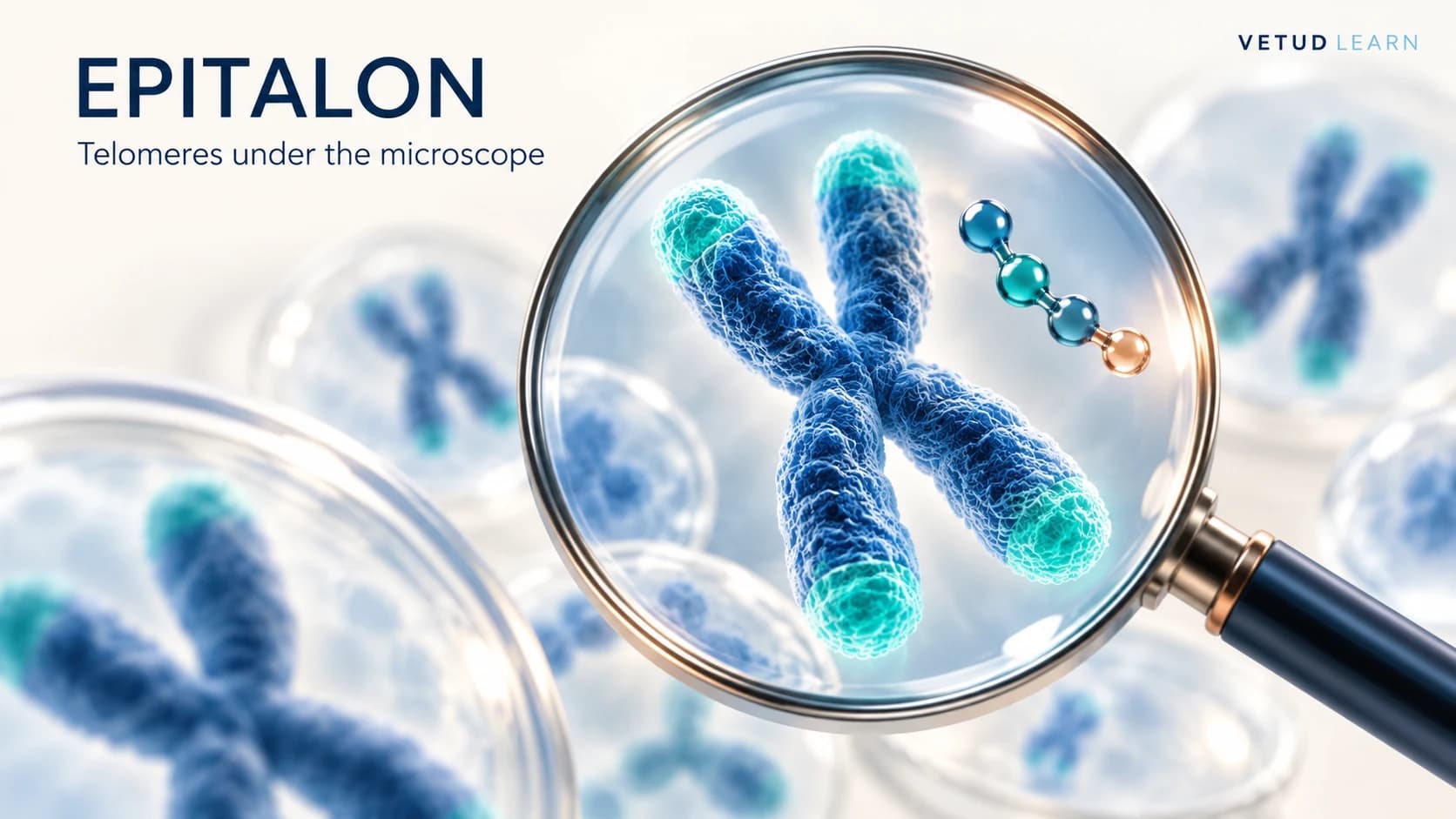
Telomeres are protective caps on the ends of chromosomes. They shorten as cells divide, which is why they are studied as a marker of aging. Epitalon, a four-amino-acid peptide developed by Russian researchers, is promoted for switching on telomerase, the enzyme that rebuilds them.
A 2025 study tested that idea in human cell lines. Researchers treated normal epithelial cells and fibroblasts, along with two breast cancer cell lines, then measured telomere length, telomerase activity and the activity of hTERT, the gene behind telomerase.
In normal cells, telomeres grew longer as the dose rose, through more hTERT activity and more telomerase. That supports the mechanism people talk about.
In the cancer cells, telomeres also lengthened significantly, but through ALT (alternative lengthening of telomeres), a backup route some cancers use to keep dividing. In normal cells, ALT activity rose only slightly.
A 2025 review of about 25 years of Epitalon research describes many effects in cells, animals and computer models, and says its mechanisms of action remain uncertain. Good human trials are still missing. FDA advisers discussed Epitalon in July 2026 as a possible compounding ingredient for insomnia.
Epitalon research material, where listed, is in the research shop for laboratory use.
What does this mean?
Epitalon can lengthen telomeres in cells in a dish. That is not evidence of a longer or healthier life in people, and the cancer-cell result is a reason for caution.
What don’t we know yet?
Whether Epitalon changes telomeres in the human body, and whether that would be beneficial given that cancer cells also rely on telomere lengthening, has not been studied.
Watch and learn
Videos discussing the compounds in this article, plus background on the biology or the research methods. Each card explains its connection; recordings may predate the findings described here.
U.S. Food and Drug Administration
FDA peptide compounding meeting: July 24, 2026
Full meeting covering DSIP (emideltide), Semax and Epitalon. Advisory discussion is not drug approval.
Official FDA advisory committee recording
Official regulatory recording
The original July 24, 2026 FDA discussion of DSIP, Semax and Epitalon; it documents an advisory review.
TED
The science of cells that never get old
The discovery and biology of telomeres. This is not a trial of epitalon or any anti-ageing product.
Elizabeth Blackburn, PhD · Nobel laureate in telomere research
Related biology
Background on telomeres and cellular ageing for understanding Epitalon. It does not demonstrate benefits of this compound or formulation.
National Institute of Mental Health
Clinical research: risks and benefits
Why an experimental treatment can involve uncertainty even when its scientific rationale sounds promising.
NIMH · US National Institutes of Health
Research skills
Helps you judge the study design or uncertainty in Epitalon research; it is not a trial of the compound.
Sources and references
- Epitalon increases telomere length in human cell lines through telomerase upregulation or ALT activityAl-Dulaimi et al. · Biogerontology · 2025
- Overview of Epitalon, a highly bioactive pineal tetrapeptide with promising propertiesAraj et al. · International Journal of Molecular Sciences · 2025
- July 23–24, 2026: Meeting of the Pharmacy Compounding Advisory CommitteeUS Food and Drug Administration
VETUD Learn explains published research in plain language. It is general information, not medical advice. Talk to a doctor before starting, stopping or changing any treatment.
In the research shop
Check the catalog for related laboratory research materials. These products are separate from the approved medicines and clinical trial formulations discussed here.
Checking regional availability…