Oxytocin: what the research shows
The “bonding hormone”, and one of the most used medicines in childbirth.
Also known as Pitocin, Syntocinon
At a glance
Approved worldwide to start or strengthen labor and to reduce bleeding after birth.
What is Oxytocin?
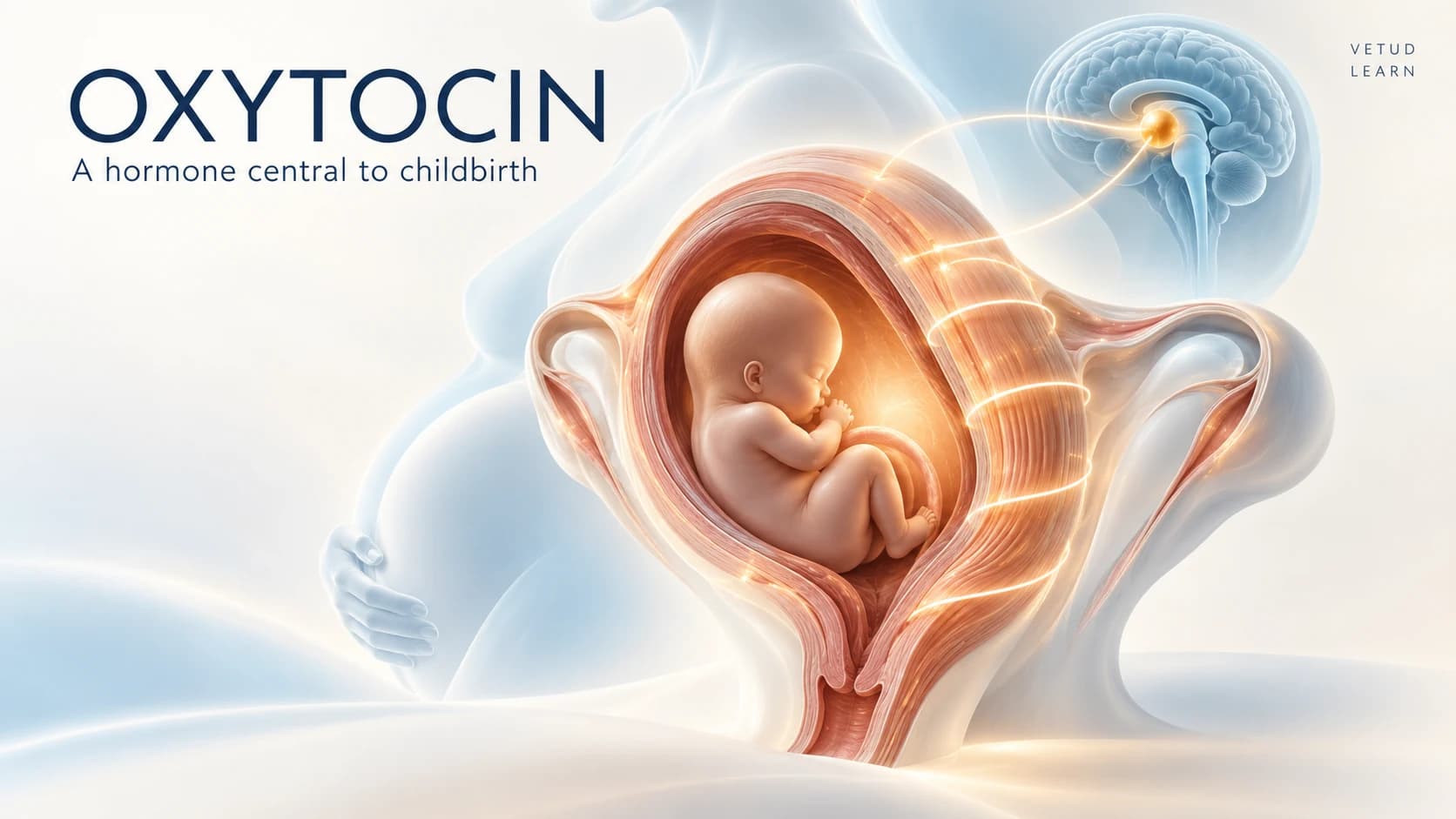
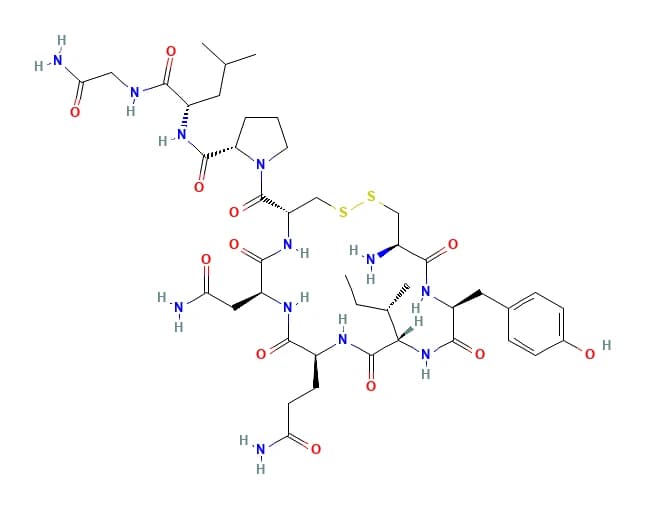
Oxytocin is a hormone of nine amino acids, made in the brain and released by the pituitary gland.
How does Oxytocin work?
It makes the womb contract during labor and helps milk flow during breastfeeding. It also plays a part in social bonding.
What does the research show?
- Given through a drip, synthetic oxytocin is a standard way to start or speed up labor and to prevent heavy bleeding after delivery (2024 review).
Known risks and side effects
- Too much can make contractions too strong, which can harm mother or baby, so it is only given under close medical supervision.
Is Oxytocin approved?
A medicines regulator, such as the FDA in the US or the EMA in Europe, has approved it for specific uses.
Approved worldwide to start or strengthen labor and to reduce bleeding after birth.
From the community
Watch: Oxytocin and related science
Start with the compound discussion, then use the background lesson to understand its biology. Each card explains its connection. Recordings may predate later findings or regulatory changes.
Osmosis from Elsevier
Knowledge Shot: Oxytocin
An introduction to oxytocin signalling, childbirth, breastfeeding and social biology.
Medical science education publisher
Discusses the compound
Discusses Oxytocin or its clinical context. Read the original studies linked here for the exact formulation, population and outcomes.
khanacademymedicine
The hypothalamus and pituitary gland
How the hypothalamus and pituitary coordinate hormone release, including growth and reproductive hormones.
Khan Academy · endocrine physiology
Related biology
Background on hypothalamus and pituitary signalling for understanding Oxytocin. It does not demonstrate benefits of this compound or formulation.
National Institute of Mental Health
What is clinical research?
Why studies in people are needed and what clinical research is designed to establish.
NIMH · US National Institutes of Health
Research skills
Helps you judge the study design or uncertainty in Oxytocin research; it is not a trial of the compound.
Sources and references
- Oxytocin: physiology, pharmacology, and clinical application for labor managementHermesch et al. · American Journal of Obstetrics & Gynecology · 2024
VETUD Learn explains published research in plain language. It is general information, not medical advice. Talk to a doctor before starting, stopping or changing any treatment.
In the research shop
Check the catalog for related laboratory research materials. These products are separate from the approved medicines and clinical trial formulations discussed here.
Checking regional availability…